
Fall is one of the best times to deal with the appliance problems you have been quietly working around. Not because every issue is an emergency. Most are not. Fall matters because it gives you a little breathing room before your appliances get pulled into the busiest stretch of the year: holiday meals, visiting family, school routines, extra laundry, full refrigerators, and kitchens that seem to run nonstop from Thanksgiving through New Year’s.
A dishwasher that has been leaving dishes a little cloudy may not feel urgent in September. A dryer that needs one extra cycle may seem annoying but manageable. An oven that takes longer to preheat might get pushed aside because it still works eventually.
Then the holidays get closer, and those problems start affecting real plans.
The good news is that fall gives you a practical window to figure out what is actually going on before you are hosting, cooking, washing guest towels, or trying to keep a fridge full of groceries cold. You do not have to panic, and you do not have to assume the worst. You just need to know which appliance warning signs are worth checking before the season gets busier.
Quick Answer: Why Should You Fix Appliance Problems in the Fall?
Fall is a smart time to fix appliance problems because your home is about to put more demand on the kitchen and laundry room. Holiday cooking, extra dishes, full refrigerators, more laundry, and visiting guests can turn minor appliance issues into bigger frustrations.
If an appliance has been acting off for weeks, fall is the time to get an honest diagnosis. That does not always mean repairing it right away, and it definitely does not mean replacing it automatically. It means getting enough information to decide whether the problem is simple, worth repairing, or something you should plan around before the holidays arrive.
Appliance Problems Usually Give You Clues First

Most appliance problems do not start as a complete breakdown. They usually show up as small changes in how the appliance sounds, smells, heats, cools, drains, dries, or runs.
A dishwasher may still finish the cycle, but water sits in the bottom longer than it used to. A dryer may still turn on, but towels take longer to dry. A refrigerator may still feel cold, but some areas are warmer than others or the motor seems to run constantly.
These clues matter because they give you time to make a calmer decision. When you catch a problem early, you can ask better questions, compare the likely repair cost against replacement, and avoid making a rushed purchase during an already expensive season.
Why Fall Is Different From the Rest of the Year
Fall changes how appliances are used in a Northern Utah home. Summer can be busy, but holiday season puts a different kind of pressure on the appliances families depend on every day.
Your oven and range may go from casual weeknight meals to baking, roasting, reheating, and hosting. Your dishwasher may run more often because of family dinners and guests. Your refrigerator and freezer may be packed with holiday groceries, leftovers, desserts, drinks, and meal prep.
Laundry also gets heavier for many homes in the fall. School clothes, sports gear, jackets, towels, bedding, and guest linens all add up, especially if the washer or dryer was already struggling before the routine got busier.
That is why fall is less about urgency and more about timing. If something feels off now, you still have time to understand it before the appliance becomes part of a bigger holiday problem.
The Problems Worth Checking Before the Holidays
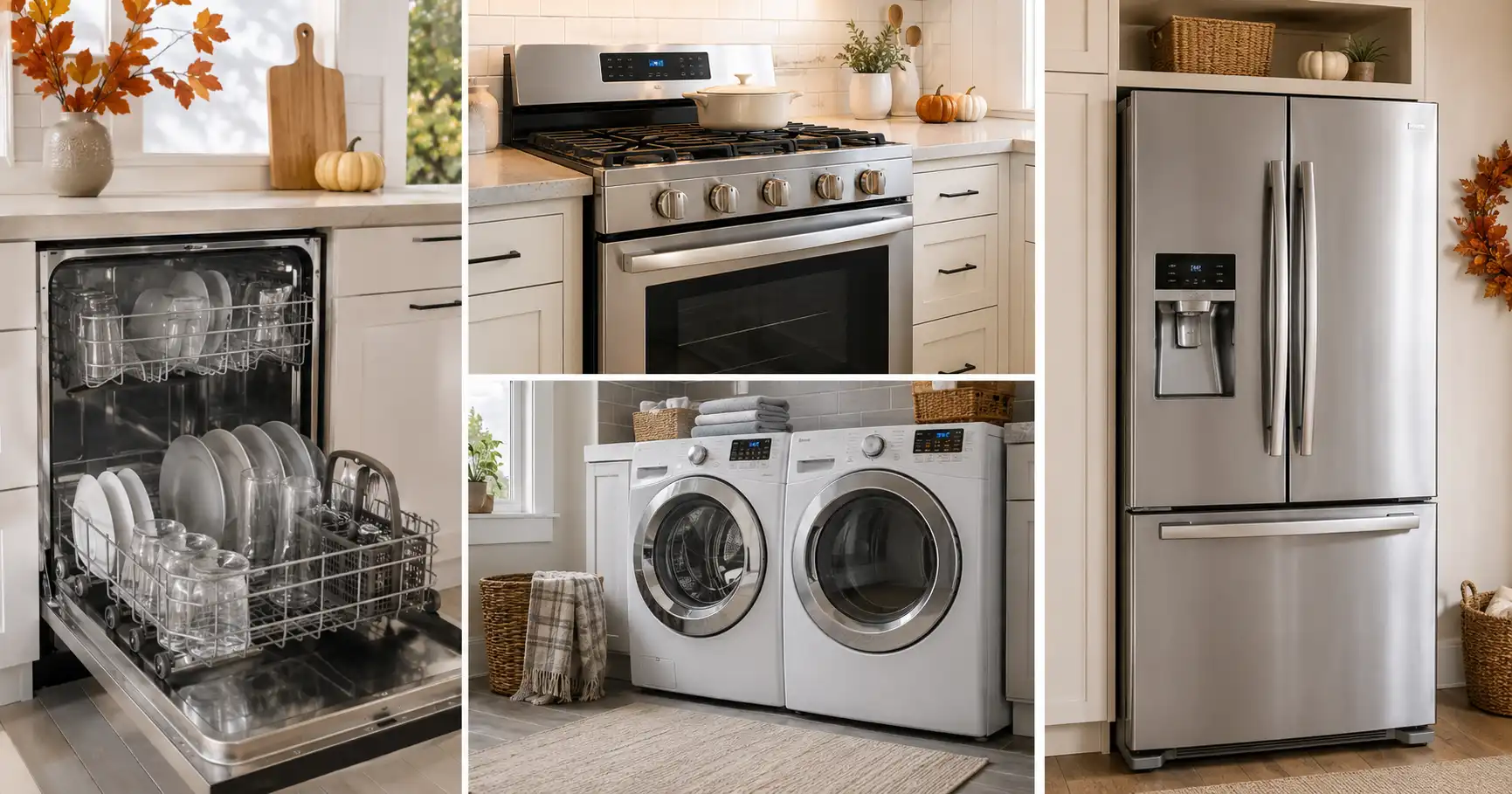
Not every appliance quirk needs a service call, but repeated issues deserve attention. The key is whether the problem is happening once, or whether it keeps coming back.
For dishwashers, watch for standing water, dishes coming out dirty, unusual grinding sounds, leaks near the front, or a cycle that seems to run but does not clean well. A single poorly loaded cycle may not mean much, but repeated cleaning or draining problems can point to a clog, pump issue, spray arm problem, or another part that needs a closer look.
For ovens, ranges, and cooktops, pay attention to slow preheating, uneven baking, burners that will not ignite properly, temperature swings, or heat that seems weaker than normal. These issues matter more before the holidays because cooking problems are harder to work around when the oven is needed for a specific meal at a specific time.
For refrigerators and freezers, do not ignore warm spots, frost buildup, water pooling, strange noises, or food that seems to spoil faster than it should. A refrigerator does not have to stop cooling completely before it becomes a problem, especially when it will soon be packed with holiday groceries.
For washers and dryers, look for clothes staying too wet, long dry times, shaking during spin, musty smells, drainage problems, or burning smells around the dryer. Some laundry issues come from load size or lint buildup, but repeated symptoms can also point to airflow, drainage, belt, pump, or heating problems.
The Big Question: Is It Worth Fixing Now?
This is the question most homeowners are really asking. They are not wondering whether appliance repair exists. They are wondering whether repair is the smart move for this appliance, at this age, with this problem.
A helpful way to think about it is this: if the appliance is newer, has been dependable, and the problem is tied to one repairable part or system, repair may make sense. If the appliance is older, has had repeated issues, and the repair cost is moving close to the cost of replacement, it may be time to think differently.
That does not mean you should guess based on age alone. Some older appliances are worth repairing because the issue is straightforward. Some newer appliances are not worth pouring money into if the same problem keeps returning or the repair is unusually expensive.
The value of a fall diagnosis is that it gives you real information. You can decide whether to fix it now, watch it for a little longer, budget for replacement, or adjust your holiday plans before the timing becomes stressful.
Why Waiting Can Cost More Than the Repair
Waiting is not always wrong. If the issue happened once and has not returned, it may be reasonable to keep an eye on it. The problem is when a homeowner keeps working around the same symptom for months. Running the dryer twice every load, resetting the dishwasher every week, ignoring a refrigerator noise, or turning the oven higher to compensate for weak heat can hide the problem until the appliance finally stops doing its job. That is when the situation becomes more expensive in a different way. You may lose food, miss a holiday meal, deal with water damage, pay for an emergency replacement, or make a rushed decision on an appliance you did not plan to buy.
Fall gives you a chance to avoid that pressure. A problem checked early is easier to think through than a major failure the week family is coming over.
What You Can Check Before Calling for Appliance Repair

Before calling for service, it is reasonable to check the simple things. These checks can help you rule out basic causes and give the technician better information if the issue continues.
For a dishwasher, check whether the filter is dirty, the drain area is blocked, or dishes are loaded in a way that prevents the spray arms from moving. For a dryer, clean the lint screen, check the vent hose for obvious kinks, and notice whether the laundry room feels unusually hot or humid during a cycle.
For a refrigerator, make sure the doors are sealing, the temperature settings have not been changed, and the vents inside are not blocked by packed food. For an oven or range, notice whether the problem happens every time or only with one burner, one setting, or one type of cooking.
These checks are not meant to turn you into an appliance technician. They are meant to help you separate one-time user issues from patterns that deserve a professional diagnosis.
When a Problem Should Not Wait
Some appliance symptoms should be treated more seriously, even if the appliance still works part of the time. Water leaks, burning smells, electrical odors, repeated breaker trips, food not staying cold, and appliances that stop mid-cycle should not be ignored.
A leak can damage flooring or cabinets if it keeps happening. A dryer airflow issue can become more concerning if heat and lint are involved. A refrigerator that is cooling inconsistently can put food at risk before the appliance fully stops.
If you notice one of these signs, it is better to stop using the appliance until you know what is happening. The goal is not to create fear. The goal is to avoid turning a repairable appliance issue into a home damage issue.
What an Honest Fall Appliance Diagnosis Should Include
An honest diagnosis should tell you what is wrong, what the likely repair involves, and whether the repair makes sense for the appliance. It should not leave you feeling pressured or confused. You should understand the difference between the diagnostic fee and the repair quote. You should know what the technician found, what part or system is involved, and whether there are signs of a larger issue. You should also be able to ask, “If this were your appliance, would you repair it or replace it?”
That last question matters. A good appliance repair company should be willing to tell you when a repair is not the best financial move, even if that means you decide not to move forward.
Why This Fits iFiX Appliance Repair’s Approach
iFiX Appliance Repair is a good fit for homeowners who are not trying to be sold into a repair. Many fall appliance calls start with uncertainty, not panic.
You may have a dishwasher that works most days, a refrigerator that sounds different, or a dryer that is slowly getting worse. You are not necessarily looking for someone to rush you into an appointment. You are looking for someone to help you understand whether the problem is worth a service call.
That is the right kind of conversation to have before the holidays. If the appliance is worth repairing, you can handle it before the busy season. If it is not worth repairing, you can make a plan before you are standing in a kitchen full of groceries or a laundry room full of guest towels.
Clear Next Steps Before the Holidays

Start by making a short list of the appliances that have been acting off. Write down what is happening, how often it happens, and whether the problem is getting worse.
Next, do the simple checks you can safely do yourself. Clean the dryer lint screen, check for obvious vent kinks, clear the dishwasher filter, confirm refrigerator doors are sealing, and notice whether oven or burner issues happen consistently.
If the problem keeps returning, call iFiX Appliance Repair and describe what you are seeing. Ask whether the symptom sounds like something worth a diagnostic visit, and ask what to expect before repair work begins.
If a technician comes out, the goal is not just to “fix something.” The goal is to understand what is wrong, what the repair would cost, and whether the repair makes sense before the holidays put more pressure on your home.
FAQs About Fixing Appliance Problems Before the Holidays
Why is fall a good time for appliance repair?
Fall is a good time for appliance repair because it gives you time to deal with problems before holiday cooking, cleaning, hosting, and laundry increase. It is much easier to make a calm repair-or-replace decision in October than during Thanksgiving week.
Fall also gives you time to plan around the answer. If the appliance is worth repairing, you can schedule the work before the busiest part of the season. If replacement makes more sense, you have time to shop without rushing.
What appliance problems should I fix before the holidays?
The most important problems to check are repeated draining issues, heating problems, cooling problems, leaks, long dry times, strange noises, and burning smells. These are the kinds of symptoms that can become harder to ignore when the appliance is being used more often.
Focus first on the appliances you will rely on most during the holidays. For most homes, that means the oven, range, refrigerator, freezer, dishwasher, washer, and dryer.
Should I repair an appliance before it completely breaks?
In many cases, yes, especially if the symptom has happened more than once or is getting worse. Waiting until the appliance completely stops working can limit your options and force a rushed decision.
That said, not every issue needs an immediate repair. The smart move is to get enough information to know whether the problem is minor, repairable, or a sign that replacement may be the better plan.
How do I know if an appliance is worth repairing?
An appliance may be worth repairing if it has been dependable, the issue is tied to a specific part or system, and the repair cost is reasonable compared with replacement. It may be less worth repairing if it is older, has multiple recurring problems, or the repair cost is close to buying a new appliance.
The best answer usually comes from a diagnosis, not a guess. A technician can help you understand whether the problem is isolated or part of a larger pattern.
Is it better to wait until after the holidays?
Waiting until after the holidays can make sense if the issue is minor, happened once, and is not affecting performance. It may not make sense if the appliance is already struggling with heating, cooling, draining, leaking, or drying.
Holiday use tends to put more demand on appliances. If the appliance is already showing signs of strain, waiting may create more stress at the exact time you need it most.
What can I check myself before calling iFiX?
You can check filters, lint screens, door seals, blocked vents, obvious hose kinks, overloaded cycles, and whether the problem happens consistently. These simple checks can sometimes solve the issue or give you better details to share when you call.
Do not take apart electrical, gas, sealed refrigeration, or internal appliance components unless you know what you are doing. If the problem involves burning smells, leaking, cooling failure, or electrical behavior, it is safer to stop using the appliance and get help.
What happens if the appliance is not worth fixing?
If the appliance is not worth fixing, that is still useful information. It helps you avoid spending money on a repair that is unlikely to give you enough value.
An honest appliance repair company should be comfortable telling you when replacement makes more sense. That kind of answer can save you from putting money into an appliance that may fail again soon.
Does iFiX Appliance Repair help with appliance problems before they become urgent?
Yes, iFiX Appliance Repair can help Northern Utah homeowners understand what is going on before a appliance problem becomes a holiday emergency. The point of calling early is not to overreact; it is to make a better decision while you still have time.
If your appliance has been acting off, describe the symptoms and ask what the next step should be. Sometimes the answer is a repair, sometimes it is a simple check, and sometimes it is an honest conversation about whether replacement makes more sense.
Before the Holiday Rush, Get a Straight Answer
Appliance problems are easier to deal with before your home is full of guests, groceries, dishes, laundry, and holiday plans. Fall gives you a chance to find out what is really happening without the pressure of an appliance failure at the worst possible time.
If your dishwasher, oven, refrigerator, washer, dryer, or another household appliance has been acting up, call iFiX Appliance Repair and explain what you are seeing. The next step should be simple: understand the problem, get a clear quote if a repair is needed, and decide whether fixing it now makes sense before the holidays arrive.
Call (801) 731-4349 or book online. Same-day appointments available.