
A dishwasher that smells bad after a busy week of cooking can be frustrating, especially around the holidays when the kitchen is already working overtime. You may run a full cycle, open the door expecting clean dishes, and still get hit with a sour, greasy, or musty smell that makes the whole kitchen feel less clean.
In many cases, the smell comes from food debris, grease, or buildup that got trapped after heavier-than-normal use. But if the odor keeps coming back after you clean the obvious areas, it can also point to drainage problems, standing water, a dirty filter area, or water that is not leaving the dishwasher the way it should.
Why Does My Dishwasher Smell Bad After Heavy Use?
A dishwasher usually smells bad after heavy use because extra food particles, grease, sauces, and dirty water get trapped in the filter, drain area, spray arms, door gasket, or bottom of the tub. Holiday meals and frequent back-to-back loads can make those smells more noticeable because the dishwasher is handling more residue than usual.
Start by cleaning the filter, wiping the door gasket, checking for standing water, and running a cleaning cycle. If the smell comes back quickly, or if you notice slow draining, dirty water in the bottom, gurgling, or dishes coming out greasy or gritty, the problem may be more than normal buildup.
Why Heavy Dishwasher Use Can Make Odors Worse
Your dishwasher is designed to handle dirty dishes, but it still has limits. When it gets overloaded with plates, pans, sauces, grease, dairy residue, eggs, starches, and small food scraps, more debris can collect in places you do not normally see.
This is especially common after holiday meals or family gatherings. A dishwasher that seemed fine during normal weekly use may suddenly smell bad after several heavy loads because the filter, drain area, and gasket are dealing with more residue than usual.
Grease is one of the biggest odor culprits. It can coat the filter, cling to the tub, settle around the door seal, or mix with small food particles in the bottom of the dishwasher. Once that residue sits in a warm, damp space, the smell can show up even after the dishes look clean.
The Most Common Causes of a Bad Dishwasher Smell
A bad dishwasher smell does not always mean something is broken. Sometimes it means the dishwasher needs a deeper clean than usual, especially after a lot of cooking.
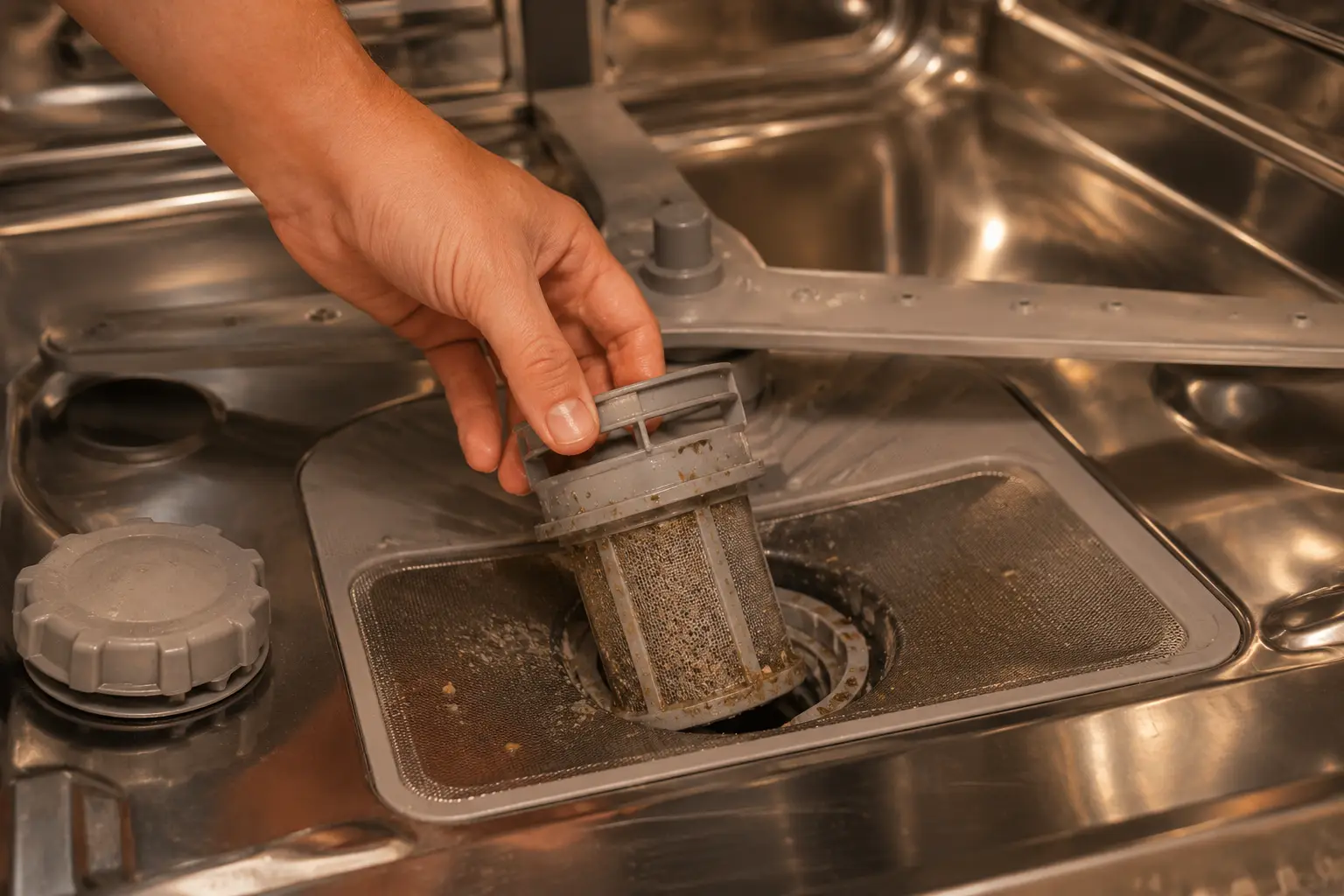
The most common cause is a dirty dishwasher filter. Many newer dishwashers have a removable filter at the bottom of the tub, and that filter can collect bits of food, grease, seeds, labels, and other debris. If it has not been cleaned recently, it can make the dishwasher smell even after a normal cycle.
Another common cause is buildup around the door gasket. The rubber seal around the dishwasher door can trap food residue, soap scum, and moisture. Because that area does not get rinsed as aggressively as the inside of the tub, odor can build up there over time.
The drain area can also hold debris. Even if there is no obvious standing water, small particles can collect near the drain cover or sump area. When the dishwasher runs repeatedly without a good cleaning, that buildup can start to smell sour or rotten.
Spray arms can contribute too. If small food particles block the spray arm holes, water may not circulate properly during the cycle. That can leave dishes dirty, allow residue to stay inside the dishwasher, and make odor return quickly after each load.
Start With These Safe Things to Check First
Before assuming you need a repair, start with the simple areas that commonly cause odor. These checks are safe for most homeowners and can help you figure out whether the smell is normal buildup or something more concerning.
First, remove and clean the dishwasher filter if your model has one. Rinse it under warm water, gently scrub away greasy residue, and check for trapped food. If the filter smells bad when you remove it, there is a good chance it is at least part of the problem.
Next, wipe the door gasket and the bottom edge of the door. Use a damp cloth and mild dish soap to clean the folds of the rubber seal and the area where the door closes against the tub. This area often holds residue that homeowners miss because it is not obvious when loading dishes.
Then check the bottom of the dishwasher for standing water or visible debris. A small amount of water below the filter area can be normal on some models, but water pooling in the tub after a cycle is not something to ignore. If the water looks dirty or smells bad, the dishwasher may not be draining fully.
It also helps to run hot water at the kitchen sink before starting the dishwasher. This gets hot water to the appliance faster, which can help break down grease during the wash cycle. Heavy holiday loads with greasy pans and cooled sauces are harder to clean if the cycle starts with lukewarm water.
What If You Already Tried Vinegar or Dishwasher Cleaner?
Vinegar, dishwasher cleaning tablets, and cleaning cycles can help with mild odor, but they do not always solve the root problem. If food is trapped in the filter or dirty water is sitting in the drain area, a cleaning cycle may only mask the smell for a short time.
That is why it is better to clean the physical debris first, then run a cleaning cycle afterward. A cleaner works best when it is removing residue from surfaces, not trying to dissolve chunks of food or grease packed into a filter.
Avoid pouring harsh drain cleaners into the dishwasher. A dishwasher is not the same as a sink drain, and aggressive chemicals can damage parts or create other problems. If you suspect a drainage issue, it is better to stop and get guidance before using products that are not made for dishwashers.
When a Smelly Dishwasher Points to a Drainage Problem
A bad smell becomes more concerning when it comes with signs that water is not leaving the dishwasher properly. Odor plus drainage symptoms usually deserves more attention than odor by itself.
Watch for water sitting in the bottom of the dishwasher after a cycle. Also pay attention to gurgling sounds, water backing up into the sink, dirty water returning to the dishwasher, or a sour smell that comes back within a day or two after cleaning.
If your dishwasher drains through the garbage disposal, the disposal connection can also matter. A clogged disposal, a blocked drain line, or an issue after a recent disposal replacement can affect how well the dishwasher drains. If the smell started after plumbing work or disposal replacement, that detail is worth mentioning when you call for help.
A drain hose issue can also cause odor. If the hose is clogged, kinked, or not installed correctly, dirty water may not move out of the dishwasher the way it should. When old water stays in the system, the smell can return even after the inside looks clean.
When the Problem May Be Mechanical
Sometimes a bad smell is the symptom you notice first, but the real issue is that the dishwasher is not washing, draining, or circulating water correctly. This is where the problem starts moving from cleaning maintenance into appliance diagnosis.
If the dishes are still greasy, gritty, cloudy, or dirty after a cycle, the dishwasher may not be spraying properly. That could be related to clogged spray arms, low water flow, a circulation issue, or another internal problem that prevents the dishwasher from cleaning well.
If the dishwasher smells bad and also leaves water behind, the issue may involve the drain pump, drain path, hose, or related components. These are not always obvious from the outside, and guessing can lead to replacing the wrong part.
If the smell is paired with unusual noises, error codes, leaks, or cycles that do not finish, it is usually worth getting a technician’s opinion. At that point, the question is not just “How do I clean this smell?” It becomes “Why is the dishwasher letting this smell come back?”
Is It Worth Repairing a Smelly Dishwasher?
A smelly dishwasher is often worth cleaning first, especially if the appliance is otherwise working well. If the filter is dirty, the gasket has buildup, or the smell showed up after unusually heavy use, the solution may be simple.
Repair becomes worth considering when the smell keeps coming back after cleaning or when odor comes with standing water, poor cleaning, slow draining, or dirty water in the tub. Those symptoms can point to a problem that a cleaning tablet will not fix.
Age matters too. If your dishwasher is fairly new and the issue is drainage-related, diagnosing the problem may make more sense than replacing the appliance. If the dishwasher is older and has multiple issues at once, you may want an honest repair-versus-replace opinion before spending money on a major repair.
That is the kind of decision Researching Rachel is trying to make. You do not want to pay for a repair that does not make sense, but you also do not want to replace a dishwasher over a problem that could have been fixed.
What to Tell a Technician If You Call
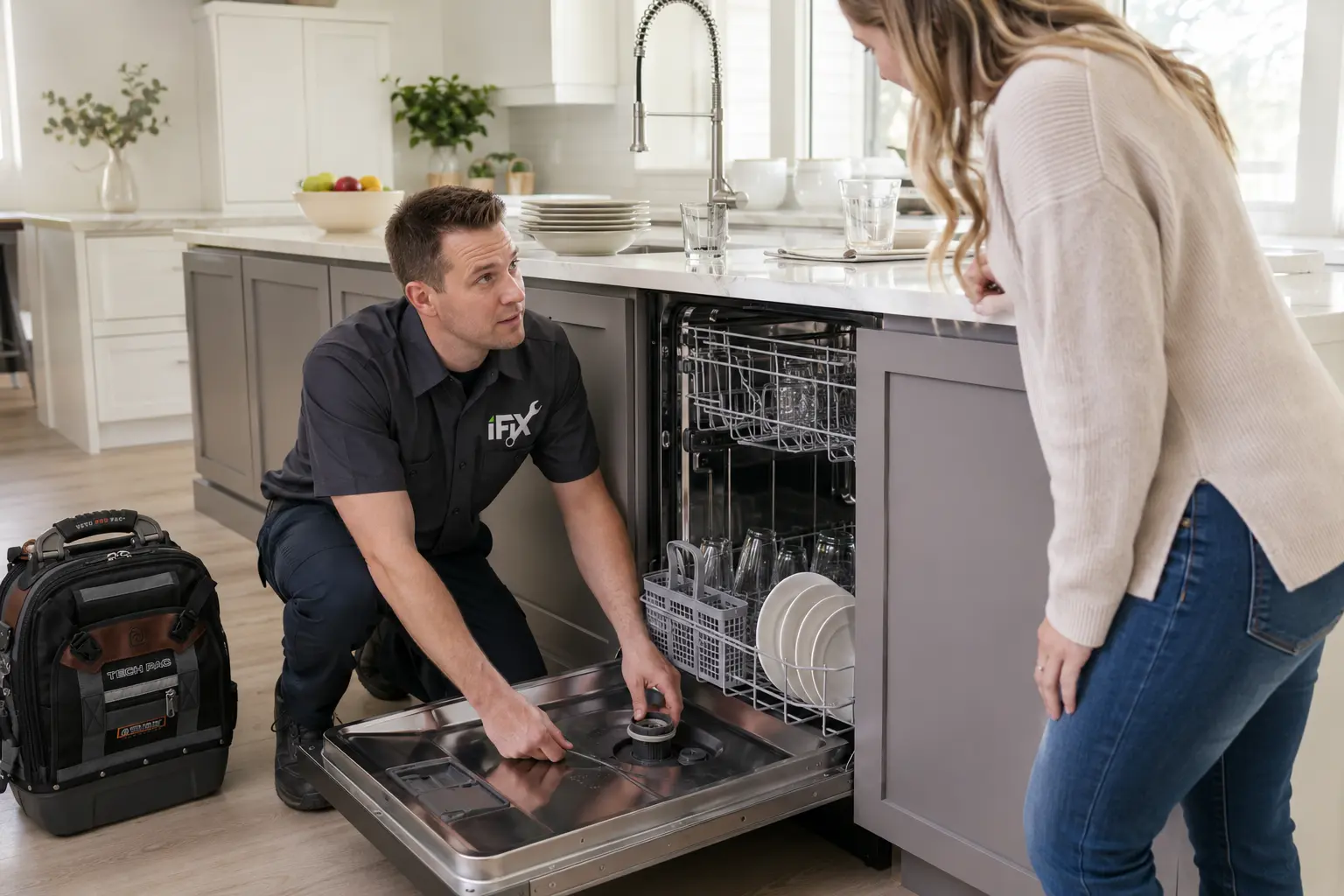
If you decide to call for advice or service, you can make the conversation easier by describing what you have already checked. You do not need to diagnose the dishwasher yourself, but a few details can help narrow things down.
A helpful way to explain it is: “My dishwasher smells bad after heavy use. I cleaned the filter and wiped the gasket, but the smell came back. I’m also noticing water sitting in the bottom after the cycle.” That tells the technician this may be more than normal odor.
Also mention whether the dishes are coming out clean, whether the dishwasher drains fully, whether the sink or garbage disposal is acting strange, and whether the smell started after holiday cooking, a disposal replacement, or a recent plumbing issue. Those details can help separate a cleaning problem from a drainage or appliance repair issue.
Clear Next Steps
Start with the simple checks first. Clean the filter, wipe the gasket, look for standing water, check the spray arms for food debris, run hot water before starting the cycle, and run a dishwasher cleaning cycle after removing buildup.
If the smell goes away and stays away, the problem was probably normal residue from heavy use. If the smell returns quickly, or if you notice standing water, slow draining, dirty dishes, gurgling, or water backing up, it is time to get a more informed opinion.
If you are in Northern Utah and you are not sure whether your smelly dishwasher is a simple cleaning issue or something worth diagnosing, call iFiX Appliance Repair and describe what is happening. iFiX can help you think through whether it sounds like a maintenance issue or whether a service call for diagnosis makes sense before repair work is quoted.
FAQs About Bad Dishwasher Smells
Why does my dishwasher smell worse after the holidays?
Your dishwasher may smell worse after the holidays because it handles more grease, sauces, food scraps, and back-to-back loads than usual. That extra residue can collect in the filter, drain area, gasket, or spray arms and start to smell in the warm, damp interior.
Can a dirty filter make the whole dishwasher smell bad?
Yes, a dirty dishwasher filter is one of the most common reasons the entire dishwasher smells bad. Food particles and grease can sit in the filter between cycles, and the smell can spread through the tub every time you open the door.
Why does my dishwasher smell bad even after I run it?
If your dishwasher smells bad even after a cycle, there may be food debris trapped somewhere the wash water is not fully clearing. The filter, door gasket, drain area, spray arms, or standing water in the bottom can all make odor come back after the machine runs.
Is vinegar enough to fix a smelly dishwasher?
Vinegar may help with mild odor, but it is not enough if there is trapped food, grease buildup, or a drainage problem. Clean the filter and gasket first, then use a dishwasher-safe cleaning cycle if needed.
Is standing water in the dishwasher normal?
A very small amount of water below the filter area may be normal on some dishwashers, but visible water sitting in the bottom of the tub after a cycle is a warning sign. If the water smells bad or looks dirty, the dishwasher may not be draining properly.
When should I call for dishwasher repair?
Call for dishwasher repair if the smell keeps coming back after cleaning, the dishwasher leaves standing water, dishes come out dirty or greasy, the unit drains slowly, or you hear gurgling or unusual noises. Those signs can point to drainage, pump, circulation, or installation-related issues that need a proper diagnosis.
Should I repair or replace a dishwasher that smells bad?
If the dishwasher only smells because of buildup, cleaning may solve it. If the appliance is older and has repeated drainage, cleaning, leaking, or cycle problems, ask for an honest diagnosis before deciding whether repair or replacement makes more financial sense.
Call (801) 731-4349 or book online. Same-day appointments available.