
Finding the freezer door left open overnight feels awful. Maybe the ice cream is soft, frost is everywhere, meat packages feel questionable, or someone in the house is already asking whether everything has to be thrown away.
The first step is not panic, and it is not guessing. A freezer door left open overnight does not automatically mean every item is ruined, but food safety depends on temperature, ice crystals, and how long the food may have been above a safe temperature.
If your freezer is not recovering after the door has been closed, call iFiX Appliance Repair. We serve Northern Utah, and most appointments are scheduled the same day you call.
What Should You Do If the Freezer Door Was Left Open Overnight?
If the freezer door was left open overnight, close the door fully, stop opening it repeatedly, and check the food with an appliance thermometer or food thermometer if you have one. Frozen food that still has ice crystals or measures 40°F or below may be safe to refreeze or cook, but food that has been warmer than 40°F for too long should not be guessed on.
Check the food package by package instead of making one decision for the whole freezer. Items deep in the freezer may still be partly frozen, while food near the door may be soft, warm, or unsafe. If you cannot confirm the temperature or how long high-risk food has been warm, be cautious instead of relying on smell, appearance, or taste. FoodSafety.gov emergency food safety guidance says you should never taste food to determine whether it is safe.
First, Do Not Keep Opening the Freezer
The most common reaction is to open the freezer, stare at the food, close it, worry, open it again, and check another shelf. That is understandable, but every opening lets more warm air in and makes recovery harder.
Open the freezer once with a plan. Check the temperature, look for ice crystals, identify high-value or high-risk food, move anything that clearly needs another cold place, then close the door and give the freezer a chance to recover.
Check the Freezer Temperature If You Can
If you have an appliance thermometer in the freezer, check it right away. A freezer should normally be kept at 0°F or below, while refrigerated food safety is generally based around 40°F or below.
If the freezer is still 40°F or below, many frozen items may still be safe to refreeze or cook, especially if they still contain ice crystals. If the freezer is above 40°F, or you do not know how long food has been above 40°F, sort carefully and do not assume everything is fine.
Look for Ice Crystals in Each Package
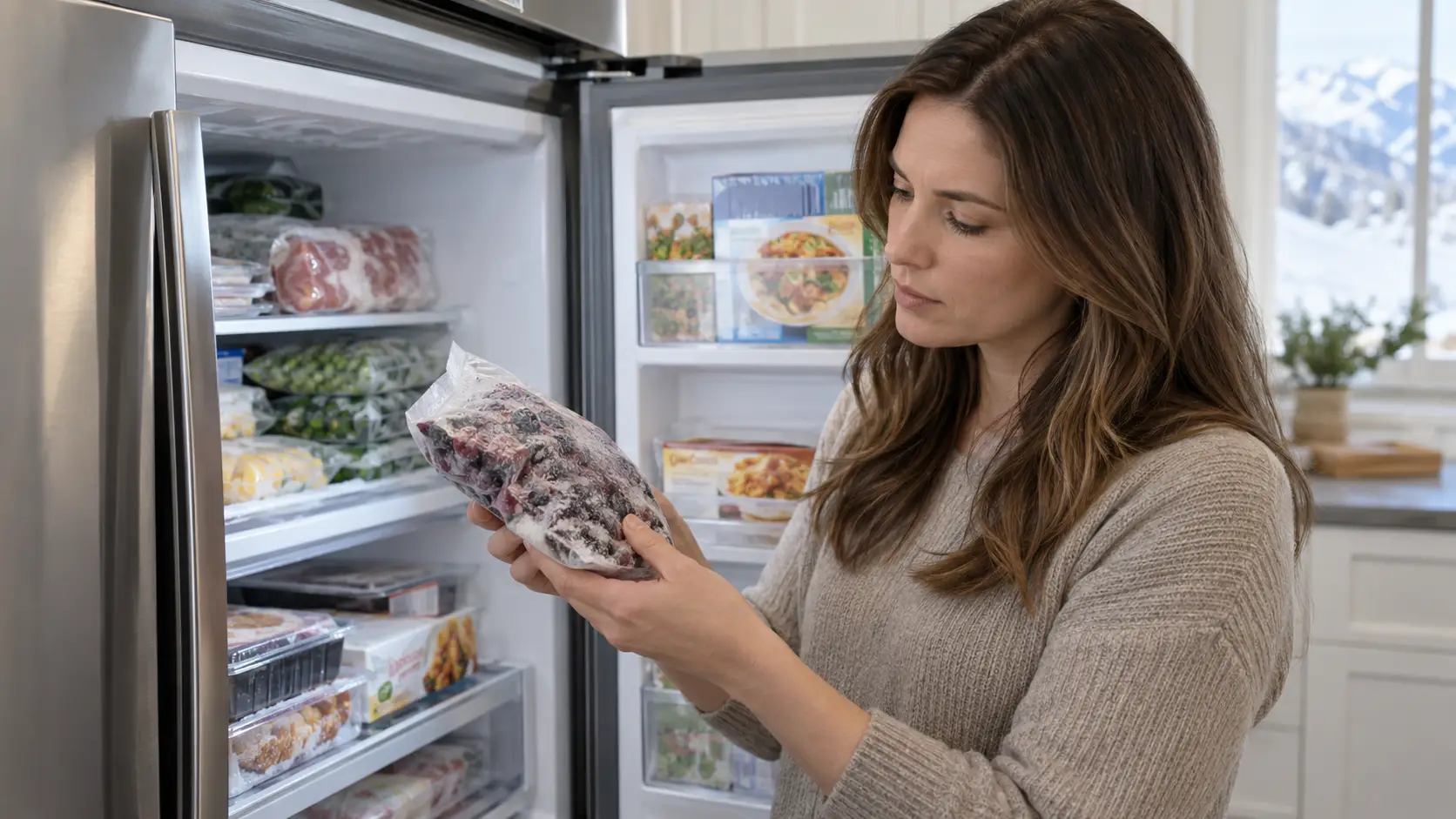
Ice crystals are one of the most useful clues after a freezer door has been left open. Meat, poultry, seafood, frozen meals, vegetables, and prepared foods that still have ice crystals may still be cold enough to refreeze or cook, depending on the item and temperature.
Do not judge only by the outside of the box or bag. A package near the door may feel soft, while a thicker package in the back or middle may still be partly frozen inside. Check individual packages, especially expensive items like meat, seafood, bulk groceries, holiday food, or meal prep you were counting on.
Sort Food Into Three Groups
Start with the food that is clearly still frozen. If it is hard, has ice crystals, and feels freezer-cold, it is usually the least concerning group. Put it back quickly, close the door, and let the freezer recover.
Next, look at food that is partly thawed but still cold. If it still contains ice crystals or measures 40°F or below, FDA food safety guidance says it may be safe to refreeze or cook, though quality may suffer.
The highest-risk group is food that feels warm, has no ice crystals, has liquid pooling in the package, or may have been above 40°F for two hours or more. Perishable foods such as meat, poultry, fish, eggs, and leftovers should be discarded if they have been above 40°F for two hours or more, or one hour if temperatures are above 90°F.
Do Not Taste Food to See If It Is Safe
A freezer door left open overnight creates a frustrating situation because some food may look normal even when it should not be kept. Smell and appearance can help you notice obvious problems, but they are not enough to prove safety.
Do not taste meat, leftovers, dairy, seafood, or prepared food to “check.” FoodSafety.gov power outage food safety guidance advises against tasting food to determine safety after a food-temperature problem, and the safer move is to use temperature, ice crystals, and time as your decision points.
Can the Freezer Recover on Its Own?
Sometimes, yes. If the door was simply blocked by a package, drawer, ice bin, or loose bag, the freezer may recover after the door is closed correctly and warm air stops entering. Give the freezer several hours with the door closed, then check the temperature again. Do not keep loading it with warm food, do not chip away frost with a knife or screwdriver, and do not assume turning the control to the coldest setting will solve a sealing, airflow, or fan problem.
Frost Everywhere After the Door Was Left Open
Heavy frost after a freezer door was left open is common because warm, humid kitchen air enters the freezer and freezes on surfaces. You may see frost on food packages, drawer rails, the back wall, shelves, vents, or around the door opening.
Some frost may clear as the freezer recovers, but heavy frost can also block airflow. If vents are covered, the fan sounds rough, or the freezer stays cold in one area while food softens in another, the freezer may need professional diagnosis.
Check Whether Something Blocked the Door
A freezer door can look closed when it is not actually sealed. A pizza box, freezer bag, drawer, ice scoop, bin, or food package can hold the door open just enough to let warm air in for hours.
After you move food back into place, close the door slowly and check the seal all the way around. If the gasket is dirty, sticky, torn, warped, or loose, warm air may keep leaking in even after the original problem is fixed.
Check the Door Gasket
The gasket is the rubber seal around the freezer door. When it does not seal tightly, the freezer may run constantly, frost may build up, and food near the door may soften first. A simple check is to close the door on a dollar bill or thin piece of paper. If it slides out with almost no resistance in several spots, the seal may not be tight enough. Clean the gasket gently if it is dirty, but do not force, stretch, or cut anything.
Watch the Freezer Over the Next Few Hours
After the door has been fully closed, the freezer should start moving back toward proper temperature. The exact recovery time depends on how long the door was open, how full the freezer is, room temperature, airflow, and whether the appliance was already struggling.
Pay attention to the trend. If the freezer temperature is dropping, food is firming back up, and the fan sounds normal, the problem may have been a one-time door issue. If the freezer runs constantly but does not get colder, food keeps softening, or water continues to show up, that is a different situation.
When a Door-Left-Open Problem Becomes a Repair Issue
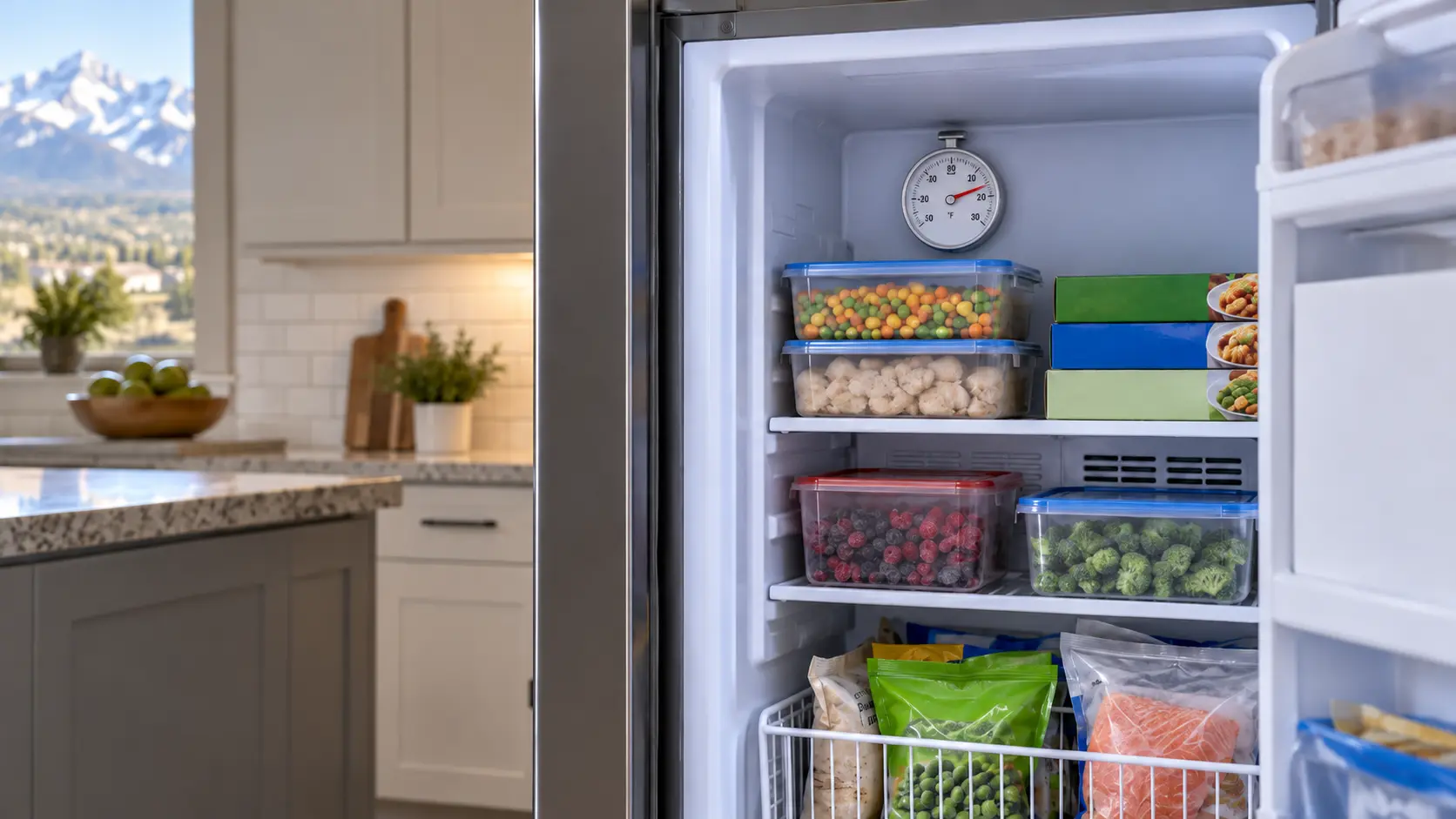
A freezer door left open overnight does not automatically mean the freezer is broken. It becomes a repair concern when the appliance cannot recover after the door is closed and the food has been sorted.
Call for help if the freezer will not return to 0°F or below, food keeps softening, frost keeps coming back, water appears around the freezer, the fan sounds weak or rough, or the freezer runs constantly without getting food solid again. Those signs can point to airflow problems, a door seal issue, frost blocking circulation, a fan problem, dirty condenser coils, controls, or another cooling issue.
What iFiX Checks During a Freezer Diagnosis
When iFiX Appliance Repair checks a freezer after the door was left open, the goal is not to guess. The technician may need to check actual freezer temperature, airflow, frost patterns, fan operation, door sealing, condenser condition, temperature controls, and whether the freezer is recovering the way it should.
That matters because “the door was left open” and “the freezer is failing” can look similar at first. A good diagnosis helps separate a one-time accident from a freezer that was already weak, not sealing properly, or unable to maintain safe temperatures.
What to Do Now
Close the freezer door fully, then stop opening it repeatedly. Check the freezer temperature if you have an appliance thermometer, and inspect individual food packages for ice crystals before deciding what to keep or throw away.
Move high-risk or high-value food to a working freezer or cooler if needed. If the freezer temperature is dropping back toward normal and the food is firming up again, the issue may have been a one-time door problem.
If the freezer is not recovering, food keeps softening, frost is heavy, water is appearing, the fan sounds wrong, or the door gasket is not sealing, call iFiX Appliance Repair.
FAQs About a Freezer Door Left Open Overnight
Is food still safe if the freezer door was left open overnight?
Some food may still be safe if it still has ice crystals or measures 40°F or below. Check food package by package instead of assuming the whole freezer is safe or ruined.
Can I refreeze food after the freezer door was left open?
Food that still has ice crystals or is 40°F or below may usually be refrozen or cooked, though quality may not be the same. If perishable food has been above 40°F too long, it should not be kept.
How long should I wait for the freezer to get cold again?
Give the freezer several hours with the door fully closed, then check whether the temperature is moving back toward 0°F. If it is not cooling down, or food keeps softening, the freezer should be checked.
Why is there frost everywhere after the freezer door was left open?
Warm, humid air can enter the freezer and freeze on shelves, packages, vents, and the back wall. Some frost is normal after the door is left open, but heavy frost can block airflow and keep the freezer from recovering.
When should I call iFiX?
Call us if the freezer will not return to proper temperature, food keeps thawing, frost keeps building, water appears, the fan sounds wrong, or the gasket is not sealing. Call (435) 466-5886 for freezer diagnosis in Northern Utah.
Call (801) 731-4349 or book online. Same-day appointments available.