
When it is hot outside and your fridge starts feeling warmer than normal, it can quickly become stressful. Maybe the drinks are not as cold, the milk feels a little warm, or the freezer does not seem as solid as it did yesterday. During a Utah heat wave, even a refrigerator that is still "kind of cooling" can become a food-loss problem if the temperature keeps climbing.
The good news is that a warm fridge does not always mean the refrigerator is done. Sometimes the issue is airflow, dirty condenser coils, a blocked vent, a loose door seal, or a fridge that has been overloaded during hot weather. Other times, the appliance needs professional attention before the food gets too warm.
Here is what to check first.
Quick Answer: What Should You Do If Your Fridge Is Warm During a Heat Wave?
If your fridge is not staying cold, start with these steps:
- Keep the doors closed as much as possible.
- Check the refrigerator temperature with a real thermometer.
- Make sure the fridge and freezer vents are not blocked.
- Look for dust or pet hair on the condenser coils.
- Check whether the door gasket is sealing tightly.
- Make sure the fridge has room to breathe around the back and sides.
- Listen for whether the compressor and fans are running.
If the fridge temperature is climbing, food is getting warm, the freezer is softening, or the fridge is running constantly without cooling, call for refrigerator repair as soon as possible.
For Northern Utah homeowners, iFiX Appliance Repair can help check what is happening, explain the issue clearly, and help you decide the next step before the problem turns into a bigger food-loss situation.
Why Refrigerators Struggle More During Heat Waves
A refrigerator does not "make cold" as much as it removes heat from inside the cabinet and releases that heat outside the appliance. During normal weather, that process is easier.
During a heat wave, the fridge has to work harder because:
- The kitchen or garage may be warmer than usual.
- The door may be opened more often for cold drinks and ice.
- The condenser coils may not release heat efficiently if they are dirty.
- The fridge may be packed tighter with groceries.
- The compressor may run longer than normal.
- Older parts may finally start showing weakness under the extra load.
That is why a refrigerator can seem fine most of the year, then suddenly struggle during the hottest week of summer. The problem may have been building for a while. The heat just made it obvious.
First: Check the Actual Temperature
Do not rely only on how the fridge "feels." A refrigerator can feel cool and still be too warm for food safety. Place an appliance thermometer inside the refrigerator, ideally in the middle shelf area, and give it a little time to settle.
Your fridge should be at or below 37°F.
If it is reading above 40°F and continuing to climb, treat the situation as urgent. Move the most sensitive items, like meat, dairy, seafood, leftovers, and baby food, into a working fridge, freezer, or cooler with ice if you can.
Also check the freezer. If frozen food is getting soft, ice cream is melting, or ice cubes are clumping together, the cooling issue may be more serious than a simple temperature adjustment.
Do Not Keep Opening the Door to Check
This is one of the most common things homeowners do during a fridge scare. Every time the door opens, warm air gets in and the fridge has to work even harder. If the refrigerator is already struggling, repeated door opening can make the temperature rise faster. Instead, check once, place a thermometer inside, close the door, and give the appliance time. If you need to remove food, do it quickly and all at once.
Check the Temperature Setting
It sounds too simple, but it happens. Someone bumps the dial while loading groceries. A child turns the control. The digital panel gets changed by accident. The fridge is set warmer than it should be, and nobody notices until the weather gets hot.
Check both the refrigerator and freezer settings. For many refrigerators, a colder fridge setting only works properly if the freezer is also cooling correctly. If the freezer is warming too, the issue is probably not just the fridge setting.
Also avoid cranking the controls to the coldest possible setting and assuming that will fix it. If airflow, coils, fans, or cooling components are the real issue, setting the control colder may only make the fridge run longer without solving the problem.
Make Sure Air Vents Are Not Blocked
Inside many refrigerators, cold air moves from the freezer section into the fresh food section through vents. If those vents are blocked by food containers, bags, boxes, or overpacked shelves, the fridge may not cool evenly. Look for vents along the back wall or between the freezer and refrigerator compartments. Make sure nothing is pressed directly against them.
A real-world clue:
If the food near the back of the fridge is too cold or freezing, but the front of the fridge feels warm, airflow may be part of the issue.
Try rearranging the food so air can move freely. Do not pack items tightly against the back wall.
Check for an Overloaded Fridge
Summer grocery runs can push a refrigerator harder than usual. A fridge packed wall-to-wall has trouble circulating air. Warm groceries also add heat inside the cabinet, especially if you just loaded a large amount of food after shopping.
If the fridge started struggling right after a big grocery trip, give it a little breathing room. Remove non-perishable drinks or items that do not need immediate chilling. Spread food out so air can move. Avoid putting large hot containers directly into the refrigerator. That said, an overloaded fridge should usually recover after several hours. If the fridge keeps running but the temperature does not improve, something else may be wrong.
Look at the Door Seal
The door gasket is the rubber seal around the refrigerator or freezer door. If it is cracked, loose, dirty, warped, or not sealing tightly, warm air can leak into the fridge all day long. During mild weather, the refrigerator may keep up. During a heat wave, that leak can become a real cooling problem.
Here is a simple check:
Close the door on a dollar bill or a thin piece of paper. Gently pull it out. If it slides out with almost no resistance, the seal may not be tight in that area.
Also look for:
- Condensation around the door
- Frost buildup near the freezer door
- A door that does not close on its own
- Food packages blocking the door from sealing
- A gasket that is dirty or sticky
Sometimes cleaning the gasket and removing items that block the door is enough. If the gasket is damaged, it may need replacement.
Check the Condenser Coils
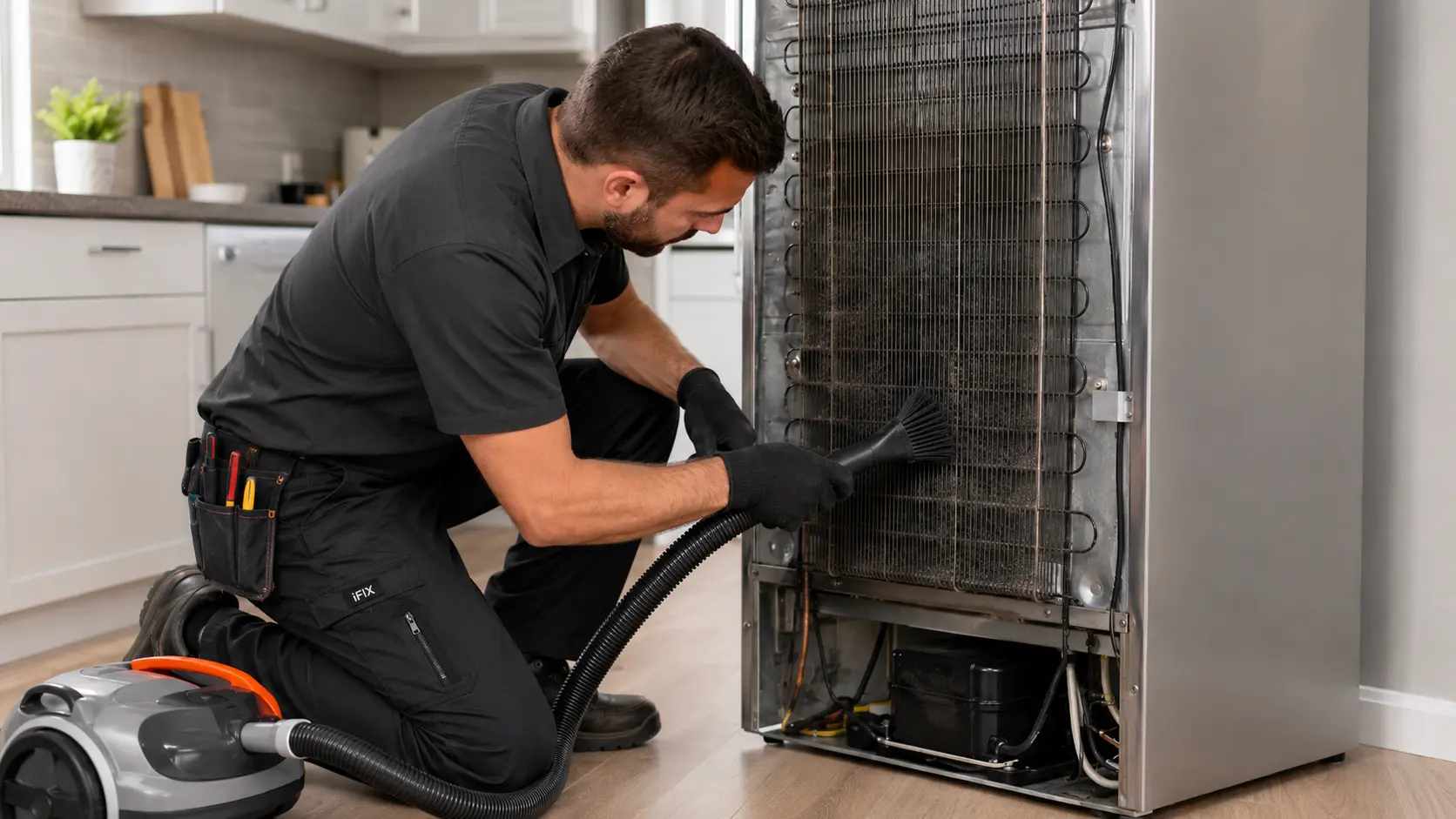
Dirty condenser coils are one of the most common reasons a refrigerator struggles in hot weather. The coils help release heat from the refrigerator. When they are covered in dust, lint, pet hair, or grease, the fridge cannot get rid of heat efficiently. That means the compressor runs longer, the fridge works harder, and cooling may get worse when the house is hot.
Depending on the model, condenser coils may be behind the lower front grille or on the back of the fridge. Before checking or cleaning coils, unplug the refrigerator if you can safely do so. Use a coil brush or vacuum attachment to remove dust and buildup. Be gentle. Do not force anything or damage wiring.
If you have pets, coils may need cleaning more often than you think. A fridge that has never had the coils cleaned can look perfectly normal from the outside and still be struggling underneath.
Make Sure the Fridge Has Room Around It
A refrigerator needs space to release heat. If it is pushed tightly against the wall, boxed in by cabinets, surrounded by clutter, or sitting in a hot garage, it may not be able to breathe.
Check behind and around the fridge. Make sure there is enough clearance for airflow. If the fridge is in a garage, remember that extreme heat can make cooling much harder, especially for units not designed for garage conditions.
A refrigerator in a hot garage may run constantly during a heat wave. That does not always mean it is broken, but if it cannot keep safe temperatures, it needs attention.
Listen for the Fans and Compressor
You do not need to diagnose the fridge yourself, but listening can help you describe the problem clearly when you call.
Pay attention to these clues:
The fridge is silent. If the lights are on but you do not hear the compressor or fans running, there may be a control, relay, thermostat, or power-related issue.
The fridge is running constantly. If it never seems to shut off but still is not cooling, it may be struggling to remove heat.
You hear clicking. Repeated clicking can point to a startup issue, compressor relay problem, or another electrical component issue.
The freezer is cold but the fridge is warm. This can point toward an airflow issue, evaporator fan problem, damper issue, or frost buildup.
Both the fridge and freezer are warm. This is more urgent. It can involve compressor, control, sealed-system, or major cooling problems.
Do not take the fridge apart based on a guess. The goal is to notice what is happening so you can explain it clearly.
Check for Frost Buildup in the Freezer
Open the freezer and look at the back wall. A little frost is normal in some situations, but heavy frost buildup can block airflow. When airflow is blocked, the freezer may still seem cold in spots while the refrigerator section warms up.
Signs of a possible defrost or airflow problem include:
- Frost covering the back wall of the freezer
- Fridge section warm but freezer section cold
- Fan noise that sounds blocked or rough
- Water leaking inside the fridge
- Ice buildup around vents
This is a common "it was cooling yesterday" type of issue. The fridge may run, but cold air is not moving where it needs to go.
What Not to Do When Your Fridge Is Warm
When food is at risk, it is tempting to try anything.
Avoid these mistakes:
Do not keep opening the doors. You will let more warm air in and make the fridge work harder.
Do not overload the freezer with warm items. That can slow cooling even more.
Do not chip away ice with a knife or screwdriver. You can puncture a refrigerant line or damage the liner.
Do not ignore a fridge that is above 40°F. Food safety matters more than hoping the appliance catches up.
Do not assume the compressor is bad just because the fridge is warm. There are several less expensive issues that can cause poor cooling.
Do not wait days if the temperature is rising. A "kind of cooling" fridge can become a full food-loss problem quickly.
When to Call for Refrigerator Repair
Call for refrigerator repair if:
- The fridge is above 40°F and not coming back down.
- The freezer is softening or thawing.
- The compressor runs constantly but the fridge stays warm.
- You hear repeated clicking.
- The fridge is warm but the freezer is icy.
- The fridge suddenly stopped cooling overnight.
- There is heavy frost buildup inside the freezer.
- You already checked the vents, settings, door seal, and coils.
- You are worried about losing food.
This is especially urgent during a heat wave because the fridge has less margin for error. Waiting another day may mean losing groceries, not just dealing with an inconvenient appliance.
What iFiX Checks During a Refrigerator Cooling Call
When iFiX Appliance Repair looks at a refrigerator that is not keeping up, the goal is not to guess. The goal is to narrow down what is actually causing the cooling problem.
A technician may check:
- Actual refrigerator and freezer temperatures
- Airflow between compartments
- Condenser coil condition
- Evaporator fan operation
- Condenser fan operation
- Door gasket seal
- Defrost system behavior
- Temperature controls and sensors
- Compressor start components
- Frost patterns
- Signs of sealed-system trouble
Some fridge cooling problems are straightforward. Others require testing before the right answer is clear. That matters because a warm fridge does not automatically mean you need a new refrigerator. But it also should not be ignored, especially when food is already warming up.
Clear Next Steps
If your fridge is struggling during a heat wave, do this now:
- Put a thermometer inside the fridge.
- Keep the doors closed as much as possible.
- Move high-risk food to a cooler, freezer, or working fridge if needed.
- Check the vents, settings, door seal, coils, and airflow.
- Call iFiX if the temperature is above 40°F, still rising, or the freezer is softening.
When you call, explain:
- When you first noticed the fridge was warm
- Whether the freezer is still cold
- The current temperature, if you have it
- Whether the fridge is running, silent, or clicking
- Whether you see frost buildup
- Whether the fridge is in the kitchen, garage, basement, or another hot area
That information helps the technician understand the situation faster.
For refrigerator repair in Northern Utah, call iFiX Appliance Repair. They can check what is happening, explain the issue clearly, and help you understand the best next step before a warm fridge turns into a bigger food-loss situation.
FAQs About a Fridge Not Cooling During a Heat Wave
Why is my fridge warm but my freezer still cold?
This often points to an airflow issue between the freezer and refrigerator sections. The freezer may still be making cold air, but that cold air may not be reaching the fridge section properly. Blocked vents, evaporator fan issues, frost buildup, or damper problems can all cause this.
Can hot weather make a refrigerator stop cooling?
Hot weather can make an existing problem show up faster. Dirty coils, weak fans, poor airflow, failing start components, or a worn door gasket may not be obvious during mild weather. During a heat wave, the refrigerator has to work harder, and weak parts may not keep up.
How long should I wait to see if the fridge cools back down?
If you just loaded warm groceries, give the fridge a few hours while keeping the doors closed. If the temperature is above 40°F, still rising, or the freezer is getting soft, do not wait overnight. Treat it as urgent.
Should I turn the fridge colder?
You can check the setting and adjust it if someone accidentally changed it, but turning the fridge to the coldest setting will not fix mechanical, airflow, fan, coil, or sealed-system problems. If the fridge is running constantly and not cooling, call for help.
Are dirty coils really enough to make a fridge warm?
Yes. Dirty condenser coils can keep the refrigerator from releasing heat properly. In summer, that can make the fridge run longer and cool worse. Pet hair, dust, and kitchen grease can all build up around coils.
Why is my refrigerator running nonstop?
A fridge may run nonstop when it is trying to reach the set temperature but cannot get there. Causes can include dirty coils, bad door seals, blocked airflow, fan problems, thermostat or sensor issues, refrigerant problems, or compressor-related issues.
Is my food still safe if the fridge feels cool?
Not necessarily. The safest way to know is to check the actual temperature with an appliance thermometer. A fridge should be at or below 37°F.
Should I unplug the fridge and plug it back in?
A reset may help with some control issues, but it can also delay getting the issue checked if the fridge is actively warming. If you do unplug it, wait a few minutes before plugging it back in. If it still does not cool, or if you hear clicking or the freezer is thawing, call for refrigerator repair.
Is a warm fridge always worth repairing?
Not always, but this is more of a check-and-confirm question than a guess. Some issues are simple and repairable. Others may be expensive enough that replacement makes more sense. The first step is finding out what failed and what options make sense.
Who should I call for fridge repair in Northern Utah?
If your refrigerator is not keeping up, the freezer is softening, or food may be at risk, call iFiX Appliance Repair. A technician can check what is happening, explain the issue clearly, and help you understand the best next step.
Call (801) 731-4349 or book online. Same-day appointments available.