
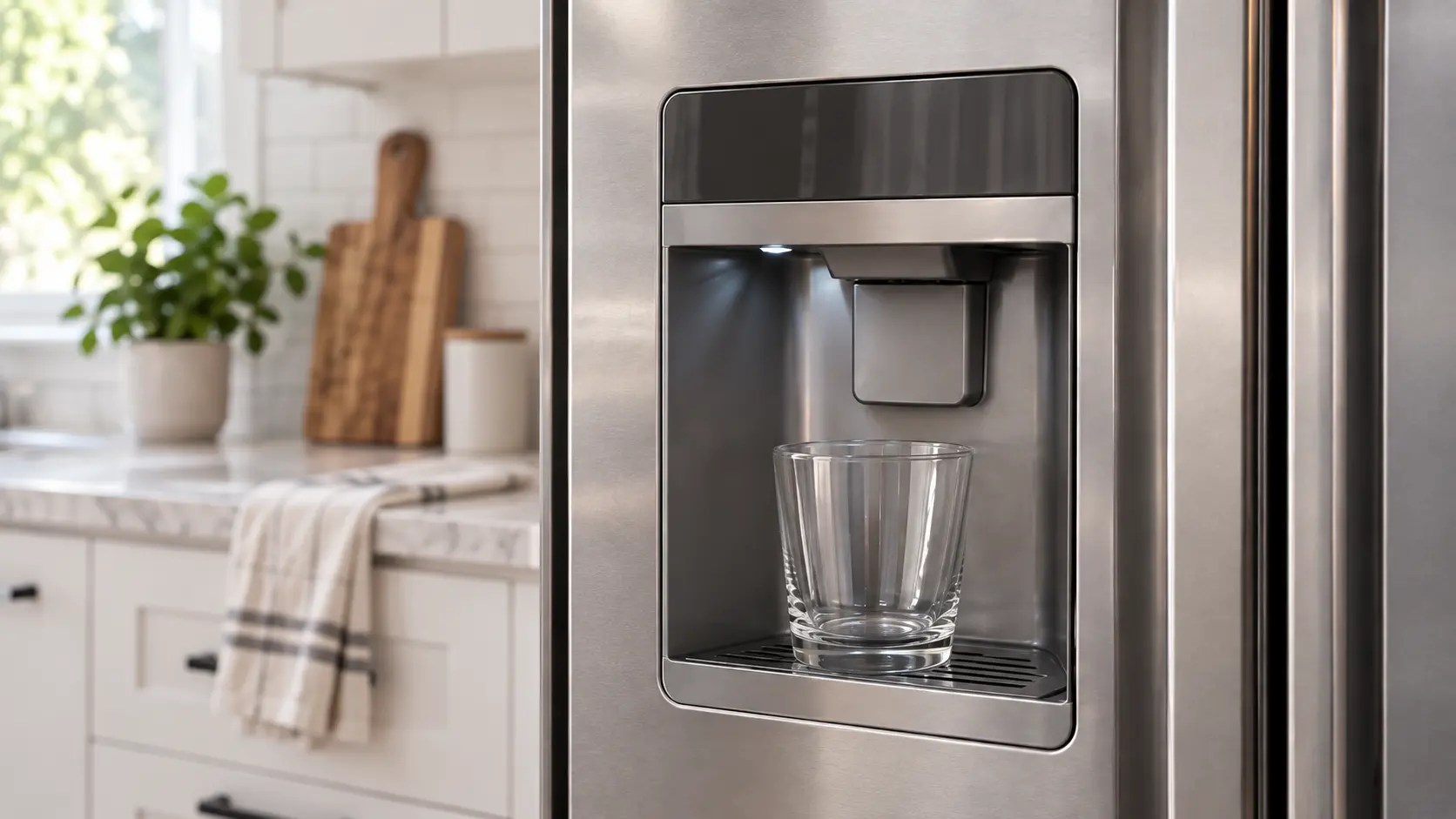
When your ice dispenser is not working, it is easy to assume the ice maker is not working as well. You press the paddle, hold your glass under the door, hear a hum or grinding sound, and nothing comes out. Or maybe there is no sound at all, even though you can see plenty of ice sitting in the bin.
That usually means you are dealing with a delivery problem, not necessarily an ice-making problem. The refrigerator may be making ice just fine, but something between the ice bin and your glass is stopping the cubes from moving through the door.
Why Is My Ice Dispenser Not Working?
If the ice maker is producing ice but the dispenser will not release it, the problem may be a jammed ice bin, clumped cubes, a blocked chute, a stuck dispenser flap, a stripped auger connection, a failed auger motor, a door switch issue, or a dispenser control problem. In other words, the ice maker may not be the part that failed.
Start by checking whether there is actually ice in the bin, whether the control lock is on, whether the bin is seated correctly, and whether the cubes are frozen into one large clump. If those simple checks do not solve it, the dispenser may need to be diagnosed before parts are replaced.
First, Confirm the Ice Maker Is Actually Making Ice
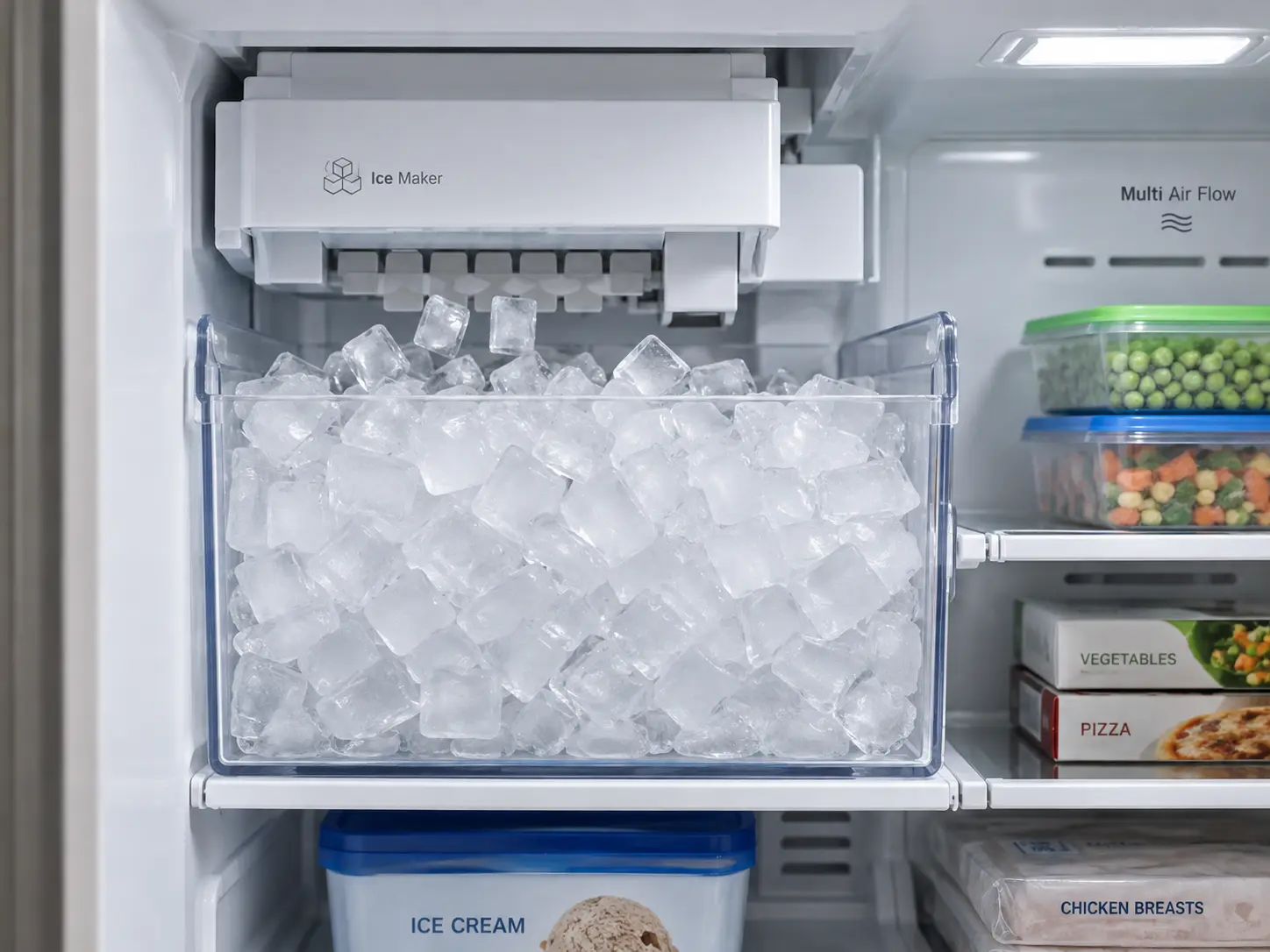
Before you focus on the dispenser, open the freezer and look inside the ice bin. If the bin is empty or only has a few small, hollow cubes, the problem may still be related to water flow, freezer temperature, the water filter, the fill tube, or the ice maker itself. If the bin is full of normal-looking ice, the ice maker has already done its job. At that point, the problem is more likely in the dispenser system, which is the part that moves ice from the bin, through the chute, and into your cup.
If There Is Ice in the Bin, the Problem May Be the Dispenser
A refrigerator ice dispenser has several parts working together. When you press the paddle, the dispenser switch tells the refrigerator to activate the system. The auger motor turns the auger inside the bin, the auger pushes ice forward, the chute opens, and the ice drops through the door. If one of those steps fails, the ice may never reach your glass. That is why a refrigerator can keep making ice while the front dispenser still does nothing.
Check the Control Lock or Dispenser Lock
Many refrigerators have a lock setting that disables the dispenser panel. This is useful for cleaning the front of the refrigerator or keeping kids from playing with the water and ice controls, but it can also make the dispenser seem broken. Look for a lock icon, control lock button, or child lock setting on the display. If the lock is on, turn it off and test the dispenser again before assuming a part has failed.
Make Sure the Freezer Door Is Fully Closed
Most refrigerators will not dispense ice if the freezer door is open or if the door switch thinks the door is open. This protects the dispenser system and keeps the refrigerator from running parts while the door is not sealed. Open and close the freezer door firmly, then try the dispenser again. If the refrigerator light stays on when the door is closed, or the dispenser only works when you press or wiggle the door switch, that switch may need attention.
Reseat the Ice Bin
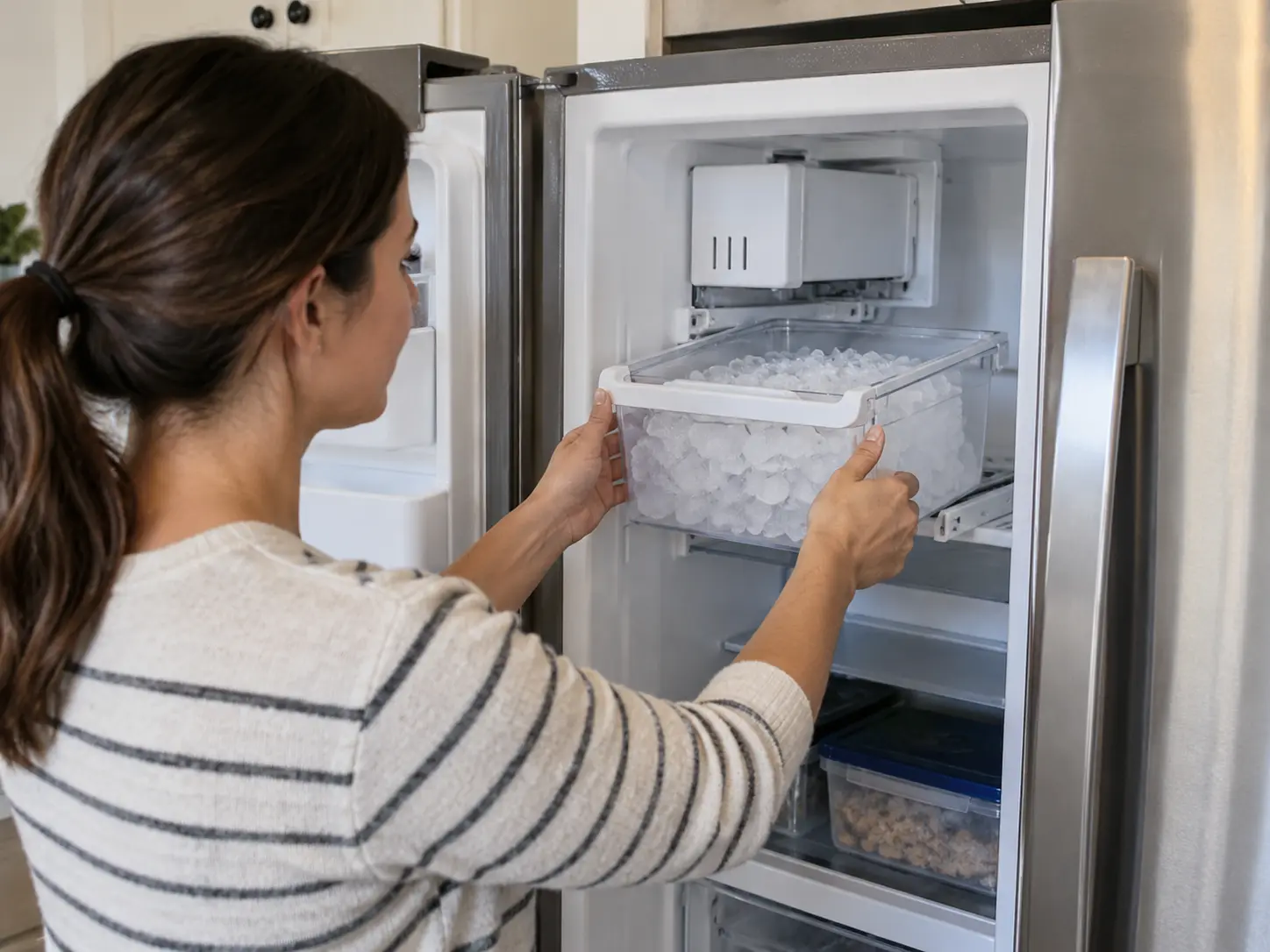
The ice bin has to sit in the right position for the auger connection to line up. If the bin was removed for cleaning, bumped during grocery loading, or pushed slightly out of place by ice buildup, the motor may run without moving ice correctly. Pull the bin out, check for loose ice behind it, then slide it back in firmly. You should feel it settle into place, and on some models, the auger coupling needs to line up before the bin seats correctly.
Break Up Clumped Ice
Ice cubes can freeze together when the freezer door is opened often, the ice bin partially melts and refreezes, or the dispenser is not used for a while. When that happens, the auger may not be able to move the ice even though the motor is trying. Remove the bin and look for large clumps. If the ice is frozen into a solid block, dump the bin or break up the ice safely outside the refrigerator, then dry the bin before putting it back.
Check for Ice Jammed in the Chute
Sometimes the ice makes it out of the bin but gets stuck in the door chute. You may see frost, crushed ice, or a cube wedged near the opening where ice comes out. Do not force sharp tools into the chute or push your fingers near moving parts. If you can safely remove loose ice from the outside opening, do that, but avoid digging deep into the dispenser assembly.
Listen to What Happens When You Press the Paddle
The sound tells you a lot. If you hear the motor running but no ice comes out, the issue may be a jammed bin, clumped ice, stripped auger coupling, frozen chute, or broken auger part. If you hear a hum but nothing moves, the motor may be stuck or struggling against a jam. If you hear nothing at all, the issue may be electrical, such as the dispenser switch, control board, door switch, wiring, or lock setting.
Try Cubed Ice and Crushed Ice
Some dispenser issues only show up in one mode. If crushed ice works but cubed ice does not, or cubed ice works but crushed ice does not, the problem may be related to the dispenser door, crusher blades, solenoid, or mode selection system. Testing both settings can help narrow the problem. It does not give a full diagnosis, but it gives a technician useful information when you call.
Watch for Frost Around the Ice Chute
Frost around the chute can point to warm air leaking into the dispenser area. A flap that does not close all the way can let air into the chute, causing ice to soften, refreeze, clog, or build frost around the opening. This is one of those problems that keeps coming back if only the ice is cleared. The real issue may be the dispenser door seal, flap, spring, or control that closes the chute after ice drops.
When the Water Dispenser Also Acts Strange
If the water dispenser is slow, weak, or not working along with the ice dispenser, the problem may be larger than the ice delivery system. A clogged water filter, low water pressure, kinked supply line, or water valve issue can affect water flow and ice production. That is different from a full ice bin that will not dispense. If the ice bin is empty and the water flow is weak, look at the water supply side first instead of assuming the auger or chute is the problem.
When the Freezer Temperature Is Part of the Problem
Ice dispensers depend on ice staying solid but not turning into a frozen block. If the freezer temperature is inconsistent, ice can partially melt, refreeze, clump together, and jam the dispenser. Pay closer attention if food is softening, ice cream is unusually easy to scoop, frost is building up around vents, or the refrigerator seems to run constantly. Those signs may mean the dispenser problem is connected to a broader refrigerator or freezer issue.
What Not to Do When the Ice Dispenser Is Stuck
Do not keep forcing the dispenser paddle if the motor sounds strained. Repeatedly forcing a jammed dispenser can make a small problem worse, especially if the auger, coupler, or motor is already under stress.
Do not use knives, screwdrivers, or sharp objects inside the chute or bin while the refrigerator is powered and assembled. Ice jams are frustrating, but damaging the chute, flap, wiring, or auger can turn a simple issue into a more expensive repair.
Common Ice Dispenser Symptoms and What They May Mean
| What You Notice | What It May Point To |
|---|---|
| Ice maker works, but no ice comes out | Bin seating issue, jammed chute, auger problem, dispenser motor, or control issue |
| Motor runs, but ice does not move | Clumped ice, stripped auger coupling, broken auger, or jammed bin |
| No sound when pressing the paddle | Control lock, door switch, dispenser switch, wiring, or control board issue |
| Ice comes out crushed when cubed is selected | Crusher gate, solenoid, or mode control issue |
| Ice drops slowly or inconsistently | Clumped ice, frost in chute, weak auger movement, or bin alignment issue |
| Frost builds around the chute | Dispenser flap or chute door may not be sealing fully |
| Ice bin is empty and water is slow | Water filter, water line, inlet valve, or water pressure issue |
| Ice is clumped into a block | Temperature swings, warm air leak, door openings, or ice sitting too long |
When to Call for Ice Dispenser Repair
Call for help if the ice bin has ice but the dispenser still will not move it after checking the lock, bin position, and obvious ice clumps. That is especially true if the motor hums, grinds, clicks, runs without moving ice, or does not make any sound at all.
You should also call if the chute keeps freezing, the flap does not close, the auger looks damaged, the freezer is not staying cold, or the water dispenser is also acting strange. Those problems usually need more than a quick reset.
Can This Be Fixed Without Replacing the Ice Maker?
Yes, sometimes. If the refrigerator is making ice normally, the ice maker is not working may not need to be replaced at all. The fix may involve clearing a jam, reseating the bin, correcting ice clumping, repairing the dispenser flap, testing the auger motor, replacing a switch, or diagnosing the dispenser controls. A good diagnosis should separate “not making ice” from “not dispensing ice” before parts are ordered.
Why a Proper Diagnosis Matters
Ice dispenser problems are easy to misread because the symptom happens at the front of the refrigerator. You press the paddle, nothing comes out, and it feels like the ice maker is not working. But the actual failure may be in the bin, chute, motor, switch, door, or control system. Replacing the ice maker without checking the dispenser path can waste time and money if the ice maker was never the problem.
What to Do Next
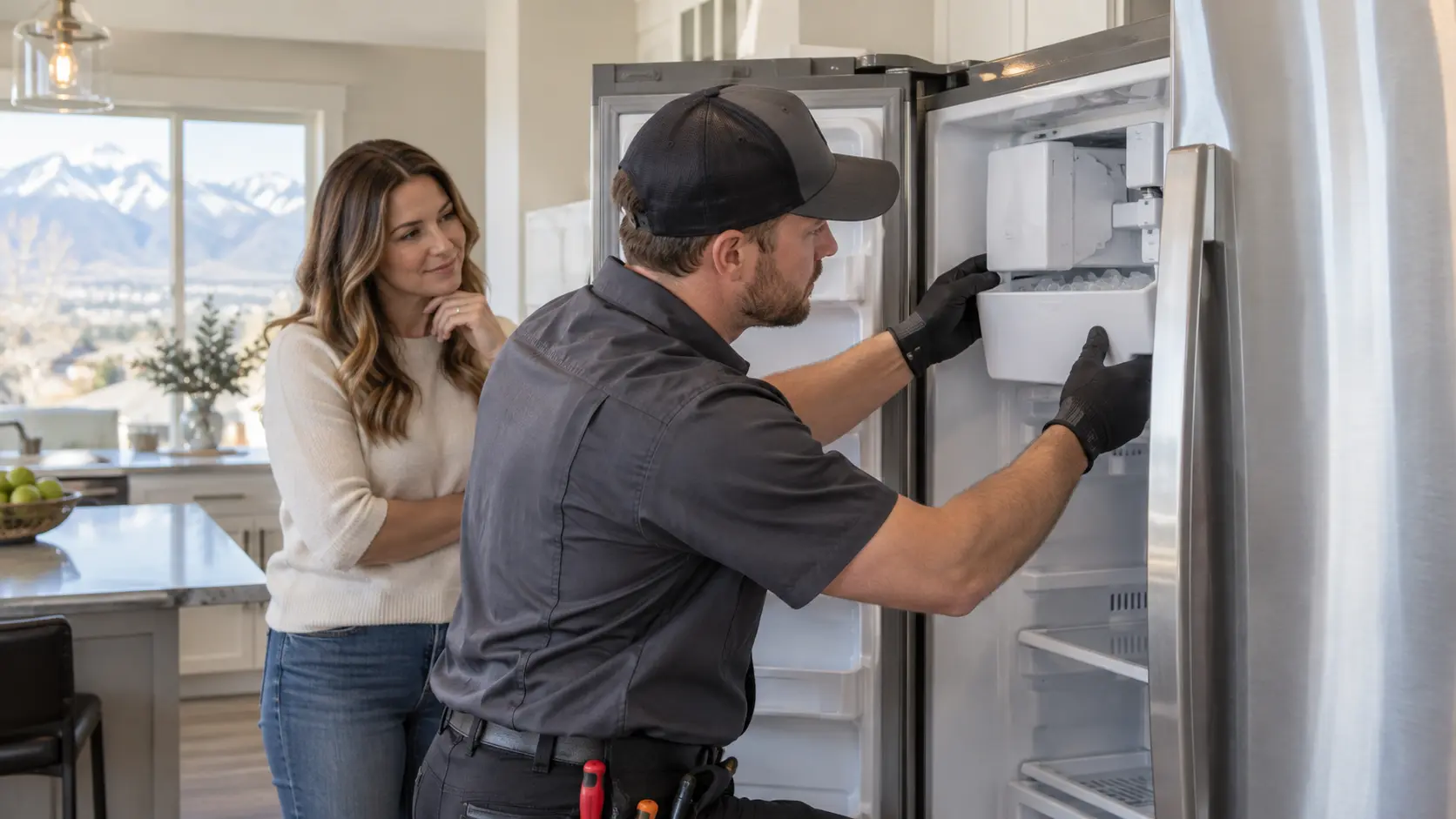
Start with the safe basics. Check that the dispenser lock is off, confirm there is ice in the bin, reseat the bin, remove obvious clumps, test cubed and crushed settings, and listen for the motor when you press the paddle.
If your ice dispenser is not working after those checks, call iFiX Appliance Repair and describe exactly what happens when you press the dispenser paddle. Tell us whether there is ice in the bin, whether you hear a motor, whether water still dispenses, and whether the freezer is staying cold.
FAQs About an Ice Dispenser Not Working
Why is my ice maker making ice but not dispensing it?
If the ice maker is making ice but not dispensing it, the problem is usually in the dispenser system instead of the ice maker itself. Common causes include clumped ice, a bin that is not seated correctly, a jammed chute, a broken auger, a failed auger motor, a dispenser switch issue, or a door switch problem.
Why does my ice dispenser make noise but no ice comes out?
If you hear humming, grinding, or motor noise but no ice comes out, the dispenser may be trying to work but cannot move the ice forward. The ice may be frozen into a clump, the auger may be jammed, the bin may not be aligned, or the motor may be struggling against a blockage.
Why is there no sound when I press the ice dispenser?
No sound may point to a control lock, door switch, dispenser switch, wiring issue, or control problem. Before assuming a part has failed, check whether the dispenser lock is on and make sure the freezer door is closing fully.
Can a dirty water filter cause an ice dispenser problem?
A dirty water filter can affect water flow and ice production, but it usually does not usually stop a full ice bin from dispensing. If the ice bin is empty, the water dispenser is weak, or the ice maker has stopped refilling, the filter or water supply may be part of the issue.
When should I call iFiX for an ice dispenser problem?
Call iFiX if the dispenser still will not work after checking the lock, bin position, and obvious ice clumps. You should also call if the motor hums or grinds, the chute keeps freezing, the auger does not turn, or the freezer temperature seems inconsistent.
Call (801) 731-4349 or book online. Same-day appointments available.