
Some cooking smells are expected. If you sear steak, fry bacon, cook fish, roast garlic, or make anything with a lot of oil and seasoning, your kitchen is probably going to smell like dinner for a little while.
But if the smell is still hanging around hours later, coming back the next morning, or spreading into the living room even when you ran the fan, it may not just be a cleaning issue. A lot of lingering kitchen odor problems come down to airflow, grease buildup, and whether your vent hood is actually moving cooking air out of the kitchen.
Why Do Kitchen Smells Linger After Cooking?
Kitchen smells usually linger because cooking particles, grease, moisture, and odors are not being pulled out of the room fast enough. Common causes include a dirty range hood filter, a recirculating vent hood, weak fan suction, a blocked vent path, poor airflow, or grease residue on nearby surfaces.
Start with the simple things first: clean the grease filter, run the fan before and after cooking, check whether the hood pulls steam upward, and wipe nearby cabinets or backsplash areas where grease can settle. If the hood fan sounds weak, does not move air well, or keeps leaving heavy smells after the filter is cleaned, the vent hood may need to be checked.
Lingering Smells Are Usually an Airflow Problem
When food smells stay in the kitchen, most people assume they did not clean well enough. Sometimes that is true, especially if grease has settled on the stovetop, backsplash, cabinets, curtains, or nearby walls.
But if the smell seems to float in the room instead of disappearing, the bigger issue is often ventilation. Your range hood is supposed to capture steam, smoke, grease particles, and odor-heavy air while you cook, then either exhaust that air outside or pull it through filters before sending it back into the room.
If that airflow is weak, blocked, or limited by the style of hood you have, smells can hang in the house long after the meal is over. That is why wiping the counters does not always solve the problem.
Common Reasons Cooking Smells Stay in the Kitchen
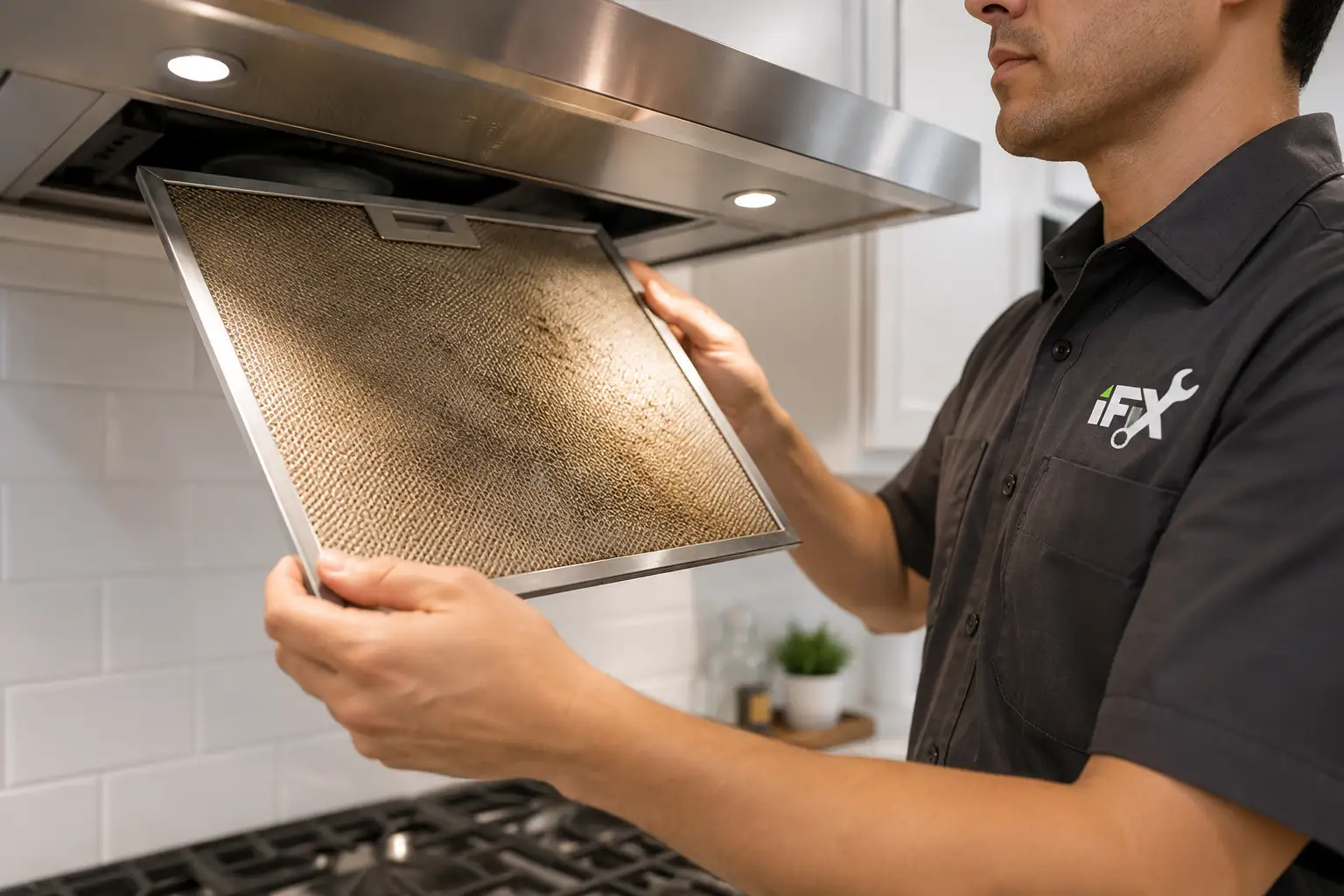
1. The Grease Filter Is Dirty
The grease filter is one of the first things to check. Over time, it catches oil, smoke residue, and cooking particles, especially if you fry food, cook with butter or oil, or use high heat often.
Once that filter is loaded with grease, air has a harder time passing through it. The fan may still make noise, but it may not be pulling enough air to remove smells effectively.
Many metal mesh filters can be removed and washed with hot water and degreasing dish soap. Some charcoal filters are not washable and need to be replaced, especially on recirculating hoods.
2. Your Hood May Recirculate Air Instead of Venting Outside
Not every range hood sends air outdoors. Some hoods are recirculating units, which means they pull air through filters and send it back into the kitchen.
That type of setup can help with some grease and odor, but it usually will not remove smells as well as an exterior-vented hood. If your kitchen has no outside vent path, strong cooking odors may linger more easily, even when the fan is working normally.
A simple way to tell is to look for an outside wall or roof vent that opens when the hood is running. If you cannot find one, or if your hood has a charcoal filter, there is a good chance the unit is recirculating.
3. The Fan Is Turned On Too Late
A vent hood works best when it is already moving air before smoke, steam, and grease build up. If you wait until the kitchen is already smoky or smells strong, the fan is playing catch-up.
Try turning the fan on a few minutes before cooking, especially when frying, searing, boiling, or cooking strong-smelling foods. Leave it running for 10 to 20 minutes afterward so it can continue clearing the air.
This small habit can make a noticeable difference. It gives the hood a better chance to capture cooking air before it spreads through the house.
4. The Fan Is Running, But It Is Not Pulling Much Air
A vent hood can sound like it is working without actually moving much air. If the fan motor is weak, the blower wheel is dirty, the filter is clogged, or the airflow path is blocked, the noise may be there but the suction may not be.
One simple check is to turn on the fan and hold a tissue or thin paper towel near the filter area. It should pull upward toward the hood, especially on a higher fan setting.
You can also watch steam while boiling water. If steam rolls forward into the room instead of being pulled up toward the hood, airflow may be weak or the hood may not be capturing the cooking air well.
5. The Vent Path or Outside Damper May Be Blocked
If your range hood vents outside, the problem may be beyond the filter. The duct, damper, or outside vent cover can sometimes get restricted by grease buildup, debris, a stuck flap, or an installation issue.
When that happens, the fan may run but the air has nowhere easy to go. This can cause smells, steam, and grease particles to remain in the kitchen.
If the hood used to work better than it does now, that is a useful clue. A change in performance often points to buildup, a fan issue, or something restricting airflow.
6. The Hood Is Too Far Away or Not Capturing the Cooking Area
Sometimes the fan is working, but the hood is not capturing enough air from the stovetop. This can happen when the hood is mounted too high, does not cover enough of the cooking surface, or is not powerful enough for the way the stove is used.
This is more noticeable with front burners because steam and smoke can escape before they reach the hood. It is also common in open kitchens where air moves easily into nearby rooms.
You may not need a repair in this situation. The issue may be design, placement, or cooking habits, which is why it helps to understand what is normal before assuming the appliance is failing.
7. Grease Residue Is Holding Odors on Surfaces
Cooking smells can cling to thin layers of grease that settle on surfaces near the stove. Even if the kitchen looks clean, cabinets, cabinet handles, the microwave face, the backsplash, light fixtures, and nearby walls may be holding odor.
This is especially common with fried foods, bacon, fish, onions, garlic, and high-heat cooking. The smell may seem like it is still in the air, but it may actually be coming from residue that needs a deeper degreasing.
If the smell comes back when the kitchen warms up or when sunlight hits the room, surfaces may be part of the problem. Cleaning the filter and wiping nearby grease-prone areas often works better than using air freshener.
8. The Kitchen Does Not Have Enough Fresh Air Movement
Vent hoods need air movement to work well. In a tight home, or on days when every window is closed, smells can stay trapped indoors longer.
Opening a nearby window slightly while cooking can help air move through the space. This is especially useful if the hood is recirculating, weak, or not placed directly over the strongest cooking area.
This does not mean you should rely on a window instead of a working vent hood. It simply gives the kitchen more airflow while you figure out whether the smell is normal, cleaning-related, or connected to the hood itself.
What You Can Safely Check First
Start with the filter because it is the most common and easiest thing to address. Remove the grease filter, check how dirty it is, and clean it if it is washable.
Next, test airflow by turning the fan on high and watching whether steam or a tissue is pulled upward. If there is almost no pull, the hood may not be moving air the way it should.
Then check whether the hood vents outside or recirculates. A vented hood should have a duct path and an exterior outlet, while a recirculating hood often uses charcoal filters that need replacement.
Finally, listen to the fan. A healthy fan usually has a steady sound, while grinding, rattling, buzzing, or a sudden drop in power can point to a motor, blower, or airflow problem.
When Lingering Smells Are Normal
Some odors are normal after cooking strong foods. Fish, garlic, onions, curry, bacon, fried foods, and high-heat searing can leave smells behind even in a kitchen with decent ventilation.
It is also normal for smells to linger longer in open-concept homes, smaller kitchens, apartments, or homes with recirculating range hoods. In those cases, the hood may be helping, but it may not remove everything.
The key question is whether the smell fades within a reasonable amount of time. If the kitchen smells greasy the next morning after normal cooking, or the fan seems to make little difference, it is worth looking closer.
Signs the Vent Hood May Be Part of the Problem
Your vent hood may need attention if the fan runs but barely pulls steam upward. It may also need service if the fan is loud, weak, rattling, humming, or only works on one speed.
Another clue is a smell that lingers even after the grease filter has been cleaned. If the filter is clean but the hood still does not move air well, the issue may be the motor, blower, switch, duct path, or damper.
You may also notice excess moisture on cabinets, greasy film building up faster than usual, or smoke spreading through the kitchen even with the fan on high. Those are signs the hood is not capturing cooking air effectively.
Is This an Appliance Repair Issue?
Sometimes, no. If the filter is dirty, the fan is being turned on too late, or the hood is a recirculating model, the answer may be cleaning, filter replacement, or better cooking ventilation habits.
Other times, yes. If the fan motor is weak, the blower is not spinning correctly, the switches are failing, or the hood no longer pulls air like it used to, it may be an appliance repair issue.
That is the difference this topic comes down to: lingering smells do not automatically mean something is broken. But if the basic checks do not improve the problem, the vent hood may not be doing its job.
A Quick Safety Note
Food odors, grease smells, and normal cooking smells are different from gas, burning plastic, electrical, or chemical smells. If you smell gas, hear gas leaking, or suspect a serious safety issue, leave the home and contact the proper emergency or utility service from outside the home.
If the smell is electrical, smoky, or burning and it is coming from the hood, range, microwave, or outlet area, stop using the appliance until it can be checked. It is better to treat those smells differently than normal food odor.
What to Do Next
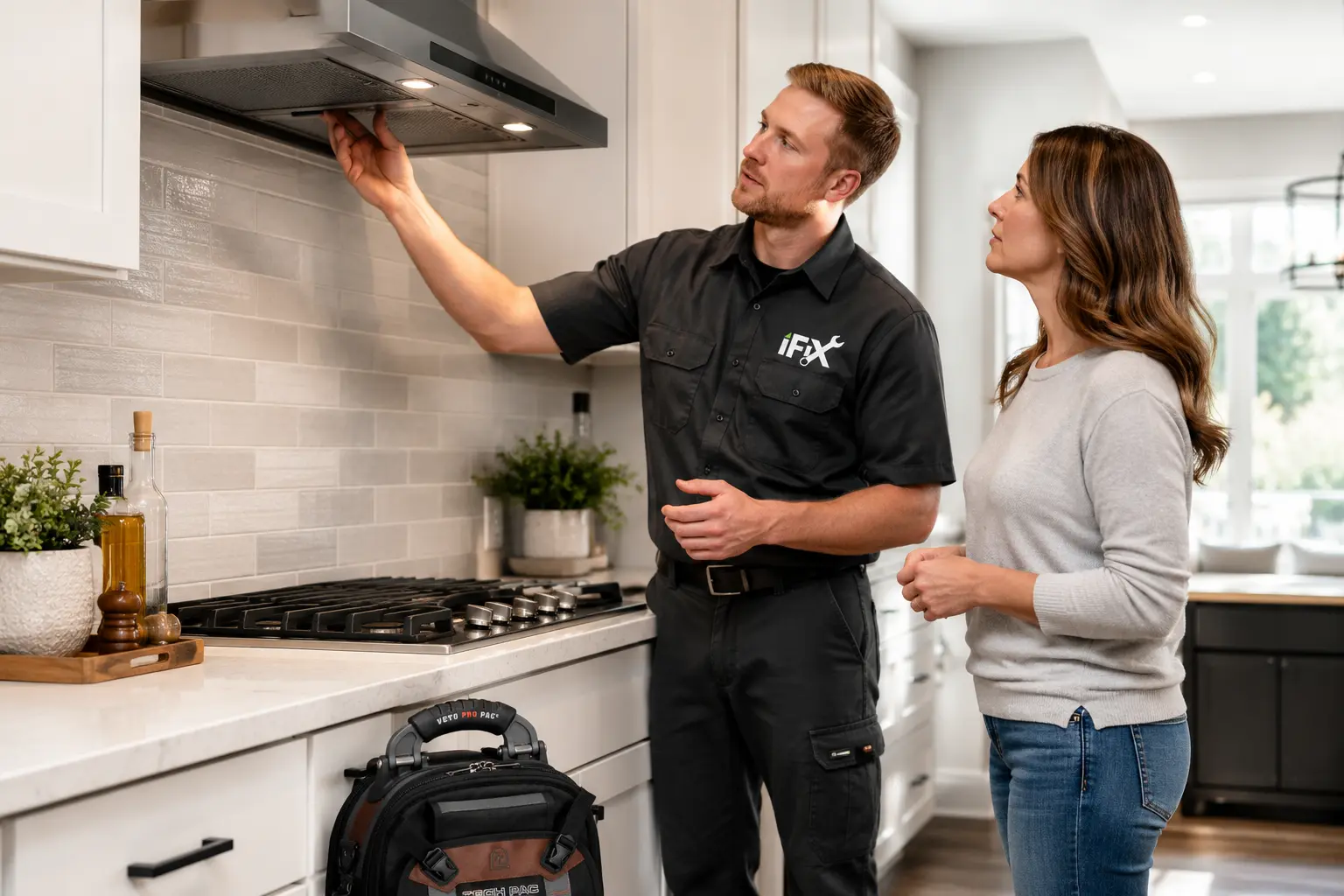
If your kitchen smells linger after cooking, start with the simple checks first. Clean the grease filter, replace charcoal filters if your hood uses them, run the fan before and after cooking, and test whether steam is being pulled toward the hood.
If the fan sounds weak, barely pulls air, does not change speeds, or still leaves heavy cooking smells after the filter is cleaned, call iFiX Appliance Repair and describe what is happening. You may not need a service call, but if the vent hood fan, motor, filter setup, or airflow needs to be checked, iFiX can help you decide the next step.
iFiX Appliance Repair serves Northern Utah homeowners and can help with vent hood and other appliance repair questions. Call (801) 731-4349 during business hours, and ask whether your vent hood issue sounds like something worth diagnosing.
FAQs About Kitchen Smells After Cooking
Why does my kitchen smell greasy the next morning?
A greasy smell the next morning usually means oil particles settled on surfaces or were not pulled out of the room during cooking. Check the vent hood filter, nearby cabinets, backsplash, microwave face, and any surfaces close to the stove.
If the grease filter is dirty, the hood may not be moving enough air through the filter. Cleaning the filter and wiping grease-prone surfaces often makes a bigger difference than spraying air freshener.
Why does my range hood fan run but not remove smells?
A fan can make noise without moving much air. The grease filter may be clogged, the blower may be dirty, the motor may be weak, or the duct path may be restricted.
Try holding a tissue near the hood while the fan is on high. If the tissue barely pulls upward, the hood may not be creating enough suction to capture cooking air.
How often should I clean my vent hood filter?
It depends on how often and how heavily you cook. Homes that fry food, cook with oil often, or use the stovetop daily usually need filter cleaning more often than homes that cook lightly.
A good rule is to check the filter monthly and clean it when it feels sticky, looks dark, or no longer lets air pass through easily. If your hood uses charcoal filters, check the owner’s manual because many charcoal filters are replaced rather than washed.
Is a recirculating range hood enough for cooking smells?
A recirculating hood can help reduce some grease and odor, but it usually will not remove smells as effectively as a hood that vents outside. It filters the air and sends it back into the kitchen instead of exhausting it outdoors.
If you have a recirculating hood, filter condition matters even more. Dirty or old charcoal filters can make lingering odors much worse.
Why does my kitchen smell even after I clean the stovetop?
The smell may be coming from grease on surfaces you do not normally wipe every day. Cabinet fronts, the backsplash, range hood exterior, microwave underside, nearby walls, and light fixtures can all hold odor.
It can also happen when the vent hood is not moving enough air while you cook. Cleaning helps, but if airflow is weak, smells will keep spreading before they ever reach the filter.
When should I call someone about a vent hood problem?
Call for help if the fan is weak, noisy, not spinning, not changing speeds, or not pulling steam upward after the filter has been cleaned. You should also call if the hood has stopped working or if you notice electrical, burning, or unusual smells coming from the unit.
If you are not sure whether it is worth a service call, start by describing what is happening. A good appliance repair company should help you understand whether the issue sounds simple, cleaning-related, or worth diagnosing in person.
Call (801) 731-4349 or book online. Same-day appointments available.