
If your washer started shaking, banging, stopping mid-cycle, or leaving blankets soaking wet after a heavy winter load, it does not automatically mean you ruined the machine. Blankets, coats, comforters, and bulky bedding absorb a lot of water, shift unevenly, and can become much heavier than they looked when you first loaded them.
The real question is whether the washer had a one-time balance problem or whether the heavy load exposed something that was already wearing out. This guide will help you understand what may have happened, what you can safely check first, and when it makes sense to have iFiX take a closer look.
Why Is My Washer Acting Up After Washing Blankets?
A washer may shake, bang, stop spinning, drain slowly, or leave blankets soaking wet after a heavy load because the items became too heavy or unevenly distributed during the cycle. A waterlogged blanket can pull the tub to one side, make the washer reduce spin speed, or cause the machine to stop before the final spin finishes.
If the washer works normally on the next regular load, the issue may have been the load itself. If the washer keeps shaking, will not spin, leaves clothes wet, smells hot, leaks, or keeps showing an error, the heavy load may have revealed a washer problem that needs diagnosis.
Why Blankets, Coats, and Comforters Are Hard on a Washer
Heavy winter laundry behaves differently than normal laundry. Shirts, socks, and towels usually move around the drum more evenly, while blankets and coats can bunch up, trap water, and settle into one heavy section of the tub.
That uneven weight matters most during the spin cycle. The washer has to spin fast enough to remove water, but if the machine senses too much imbalance or resistance, it may slow down, pause, or stop to avoid damaging the drum, motor, suspension, or other internal parts.
Many washers include a bulky, bedding, or heavy-duty cycle for this reason. Whirlpool recommends using a bulky cycle for large or heavy items like comforters, heavy washable coats, sheets, and bedding because those items need a cycle designed for their size and weight.
The Big Question: Did I Overload It, or Is Something Broken?
This is the part most homeowners are trying to figure out. The washer worked before the blanket load, so it is natural to wonder whether the load caused the problem or simply made an existing issue obvious.
A heavy load can absolutely create a temporary problem without causing permanent damage. It can also put enough stress on the washer to reveal worn suspension rods, weak shocks, a drain restriction, a tired belt, a lid lock problem, a weak motor, or a spin issue that had not shown up during normal laundry.
Probably a One-Time Load Issue If...
The problem is more likely related to the blanket, coat, or comforter load if the washer only acted up during that bulky cycle. That is especially true if the washer drained, spun, and sounded normal again when you ran a regular load afterward.
It may also be a load issue if there was no burning smell, no leaking, no grinding sound, and no repeated error code. In that case, the washer may have simply struggled to balance the heavy item during the final spin.
More Likely a Repair Issue If...
The problem is more concerning if normal loads now come out wetter than usual, the washer keeps banging or walking, or the machine will not complete a spin cycle. Those symptoms suggest the issue is no longer limited to one bulky load.
You should also pay attention to standing water, repeated balance errors, grinding or buzzing noises, hot smells, leaks, or a washer that keeps stopping at the same point in the cycle. Those signs can point to a drain, spin, suspension, motor, lid lock, belt, or control issue that should be checked before more damage happens.
Common Washer Problems After Washing Heavy Winter Loads
1. The Washer Shakes, Bangs, or Walks
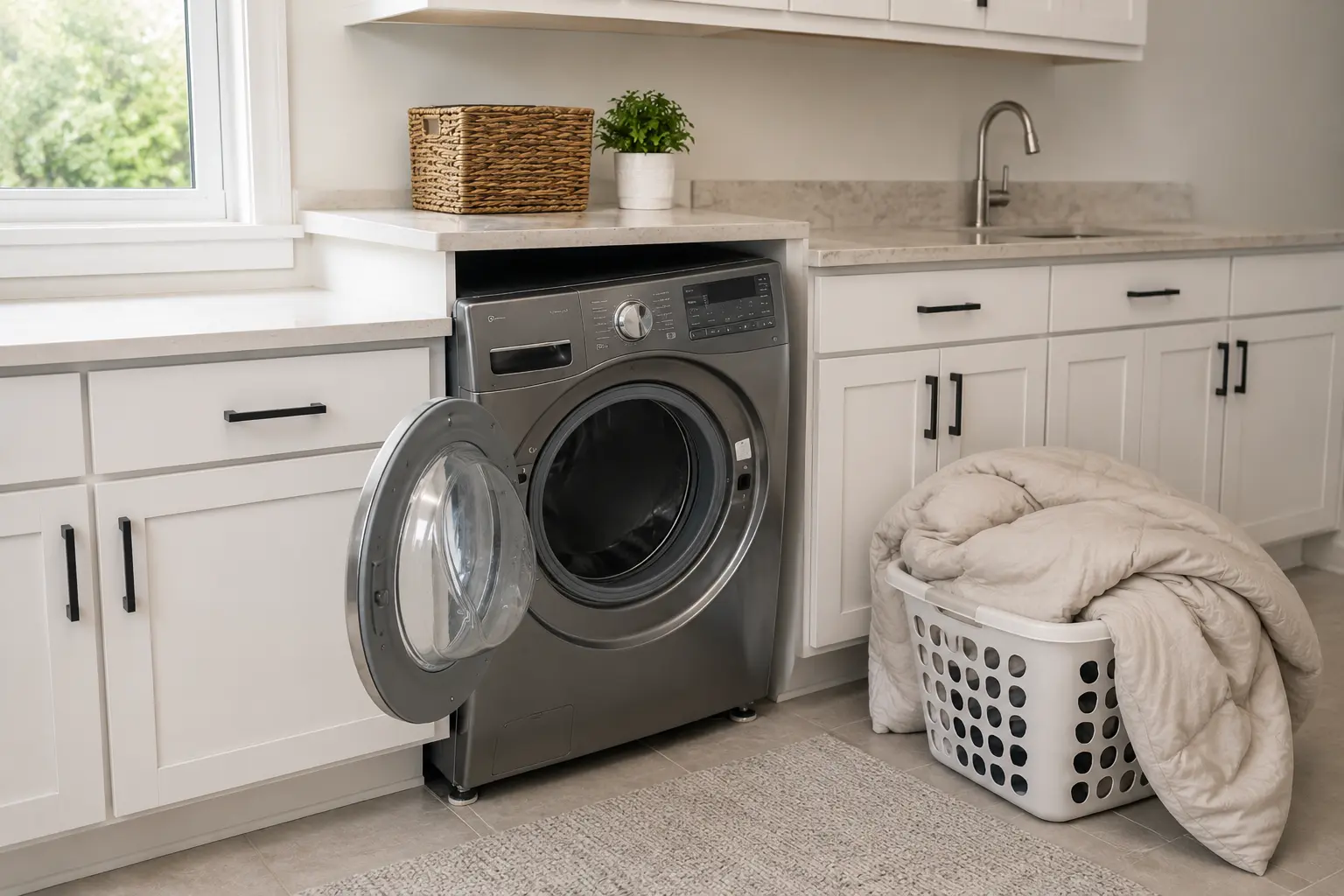
A washer that shakes hard after washing a blanket or comforter is often dealing with an unbalanced load. When one heavy item settles to one side of the tub, the washer may thump, rock, bang against the cabinet, or move across the floor during spin.
If this happened once, remove the bulky item and try a normal load. If the washer keeps shaking with everyday laundry, the problem may involve leveling, suspension rods, shock absorbers, tub movement, or another internal support issue.
2. The Blanket Comes Out Soaking Wet
A soaking wet blanket usually means the washer did not reach a full final spin. That can happen when the load is too heavy, too uneven, or too difficult for the washer to balance.
If lighter laundry spins normally afterward, the machine may be okay. If every load starts coming out wet, the washer may have a drain pump issue, lid lock problem, slipping belt, weak motor, clogged drain path, or spin system problem.
3. The Washer Will Not Spin After a Heavy Load
A washer may refuse to spin when it still has water inside, when the load is unbalanced, or when a safety switch or sensor is not allowing the spin cycle to start. This can feel like the washer suddenly failed, but sometimes the machine is preventing itself from spinning under unsafe conditions.
If the washer will not spin even after you remove the heavy items, redistribute the load, and try a drain-and-spin cycle, it is time to look deeper. iFiX has a related guide on why a washing machine won’t spin that explains common causes like unbalanced loads, drain issues, lid or door switch problems, belts, motors, and control issues.
4. The Washer Drains Slowly or Leaves Water in the Tub
Heavy blankets, rugs, and coats can release lint, pet hair, loose fibers, and debris into the wash water. If the washer already had a partial clog or weak drain pump, that bulky load can make the problem show up more clearly.
A washer that cannot drain properly usually cannot spin properly either. If water stays in the tub, or if the washer hums, stops, or leaves the load dripping wet, the drain hose, pump filter, pump, or drain path may need attention.
5. The Washer Smells Hot or Sounds Strained
A hot smell after a heavy washer load is different from a simple balance issue. It may point to a belt, motor, pump, or drive system working harder than it should under the weight of the load.
Do not keep restarting the washer if you smell burning rubber, hot electrical parts, or overheated metal. Let the washer sit, avoid forcing more cycles, and call for guidance before a repairable issue turns into a more expensive failure.
What You Can Safely Check First
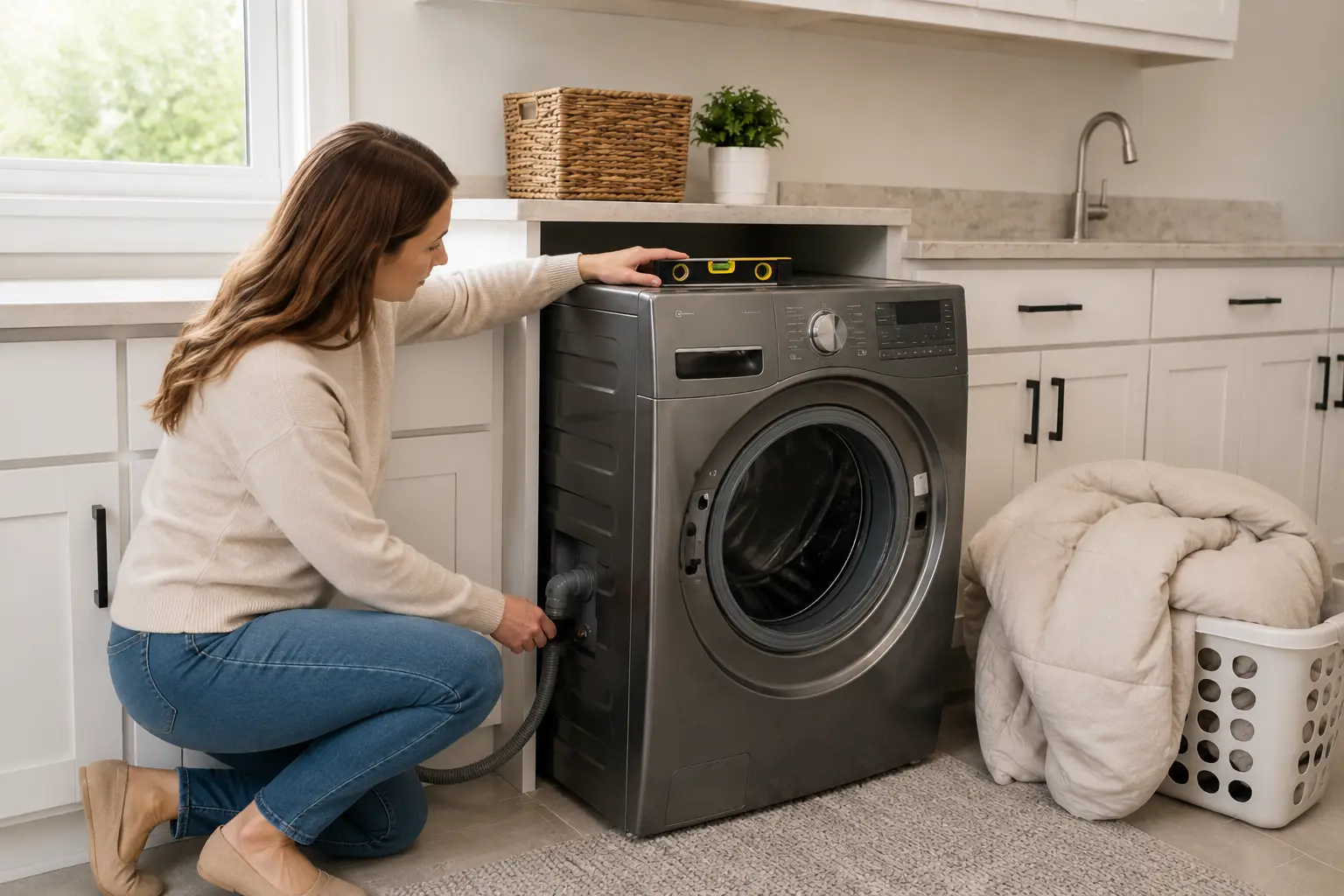
Start by removing the heavy blanket, coat, or comforter from the washer. If the item is extremely wet, place it somewhere it can drain safely because it may be much heavier than expected.
Next, check whether there is standing water in the tub. If your washer has a drain-and-spin cycle, you can try that once, but do not keep forcing the machine if it stops again, smells hot, or makes unusual noises.
After that, run a normal-sized load of everyday laundry. If the washer drains, spins, and sounds normal, the bulky load was probably the main issue.
You can also check whether the washer is level, whether the drain hose is kinked, and whether the machine is overloaded. These simple checks can prevent unnecessary worry, but they should not be used to ignore repeated symptoms.
When to Stop Using the Washer
Stop using the washer if it is leaking, grinding, smelling hot, repeatedly stopping, or leaving water in the tub. Those symptoms can get worse when the washer is forced through more cycles.
You should also pause if the washer is banging violently or moving across the floor. A severely unbalanced washer can stress internal parts, damage flooring, or cause hoses and connections to shift.
Can Washing One Heavy Blanket Break a Washer?
One heavy blanket does not automatically break a washer. Many machines can handle bulky items when the correct cycle is used, the item has enough room to move, and the load stays balanced.
The bigger issue is that a heavy blanket can stress parts that were already weakening. If the suspension, drain pump, belt, motor, or spin system was already close to failing, the bulky load may be the moment you finally notice the problem.
How to Wash Heavy Winter Items More Safely Next Time
Use the bulky, bedding, or heavy-duty cycle when your washer offers one. These cycles are better suited for large items than a normal cycle because they are designed around heavier fabrics and different water movement.
Avoid stuffing the washer just because the blanket fits when dry. Once a blanket absorbs water, it becomes heavier, takes up more space, and may not move freely enough for the washer to balance itself.
If a comforter, rug, or coat barely fits, consider using a larger-capacity machine at a laundromat. That is usually better than forcing an oversized item into a residential washer and hoping the spin cycle can handle it.
Should You Repair or Replace the Washer?
If the washer is newer and worked well before the heavy load, repair may make sense if the issue is isolated. Problems like a drain restriction, lid lock issue, belt problem, or suspension issue can often be diagnosed and addressed without replacing the whole machine.
If the washer is older, has had repeat issues, or already struggled before the heavy load, the decision may need more thought. In that case, the question is not only whether the washer can be fixed, but whether the repair makes sense compared with the age and condition of the machine.
That is why an honest diagnosis matters. You want to know what failed, what the repair would cost, and whether the washer is worth putting money into before you make a decision.
What iFiX Looks at During a Washer Diagnosis
When iFiX checks a washer after a heavy-load problem, the goal is to separate a load-related issue from a real machine problem. The technician may look at the drain system, pump, belt, lid or door lock, suspension, tub movement, spin behavior, error codes, and signs of overheating or abnormal resistance.
If a repair is needed, iFiX quotes the repair before starting the work, so you can decide whether moving forward makes sense.
Labor is backed by a 1-year workmanship guarantee. That applies to the work performed, while parts and unrelated future failures are handled separately based on the part, brand, and situation.
Related iFiX Guides That May Help
If your washer will not spin after the heavy load, read iFiX’s guide on why your washing machine won’t spin. It covers common causes like unbalanced loads, drain issues, lid or door switch problems, belts, motors, and control problems.
If your blanket or clothes are coming out dripping wet, the article on why your washer leaves clothes soaking wet may help you narrow down whether the issue is balance-related, drain-related, or spin-related.
If the washer has standing water inside, the guide on how to drain a washing machine that won’t drain is a useful next read. For service help, you can also visit iFiX’s washing machine repair page.
FAQs About Washer Problems After Washing Blankets
Can washing a heavy blanket break a washer?
Washing one heavy blanket does not always break a washer, but it can overload the machine or throw the tub off balance. If the washer works normally afterward, it may have been a one-time load issue.
If the washer keeps shaking, will not spin, smells hot, leaks, or leaves normal loads wet, the heavy blanket may have exposed a real problem. That is when it is worth getting the washer diagnosed before continuing to use it.
Why is my washer shaking after washing a comforter?
A comforter can absorb water unevenly and settle on one side of the drum. When the washer tries to spin, that uneven weight can cause shaking, banging, or movement.
If the shaking only happens with comforters or blankets, load size may be the main issue. If the washer shakes during normal loads too, the problem may involve leveling, suspension, shocks, or tub support.
Why is my blanket still soaking wet after the washer finishes?
A blanket may still be soaking wet because the washer never reached a full final spin. That often happens when the load is too heavy, too unbalanced, or too difficult for the machine to distribute evenly.
If regular laundry also comes out wet, the issue may be deeper than the blanket. Drain pump problems, clogged drain paths, lid lock issues, belts, motors, or spin problems can all leave clothes wetter than they should be.
What should I do if my washer will not spin after a heavy load?
Remove the heavy items first, then check whether water is still sitting in the tub. If your washer has a drain-and-spin cycle, you can try it once, but do not keep forcing the machine if it stops again.
If the washer still will not spin with the bulky items removed, it should be diagnosed. A washer that cannot spin may have a balance issue, drain problem, lid or door lock problem, belt issue, motor problem, or control issue.
Is it safe to keep using a washer after overloading it?
It may be safe to run a normal load if there is no leak, hot smell, grinding noise, standing water, or repeated error code. If the washer runs normally afterward, the overload may not have caused lasting damage.
It is not a good idea to keep using the washer if it keeps banging, stopping, failing to drain, or leaving clothes soaked. Continued use can make some problems worse and may increase the repair cost.
Should I call appliance repair after overloading my washer?
You may not need a service call if the washer returns to normal on regular loads. A single unbalanced blanket load is common and does not always require repair.
You should call if the symptoms continue, especially if the washer will not spin, will not drain, smells hot, leaks, or shakes badly during normal loads. iFiX can help you decide whether the issue sounds worth a service call before you commit.
What to Do Next

If your washer only acted up once after a heavy blanket, coat, or comforter load, remove the bulky item and test the washer with a normal load. If the washer drains, spins, and sounds normal, you may simply need to adjust how you wash heavy winter items next time.
If the washer keeps shaking, will not spin, drains slowly, leaves clothes wet, smells hot, leaks, or shows repeated errors, the heavy load may have exposed a real washer problem. In that case, it is better to get an honest diagnosis before continuing to run the machine.
Not sure if the heavy load caused a one-time balance issue or revealed a washer problem? Call iFiX Appliance Repair and describe what happened. We will help you decide whether it sounds worth a service call before you commit.
iFiX Appliance Repair serves homeowners throughout Northern Utah. Call (801) 731-4349 Monday through Friday, 8am–5pm, or visit the book your service page when you are ready to schedule.
Call (801) 731-4349 or book online. Same-day appointments available.