
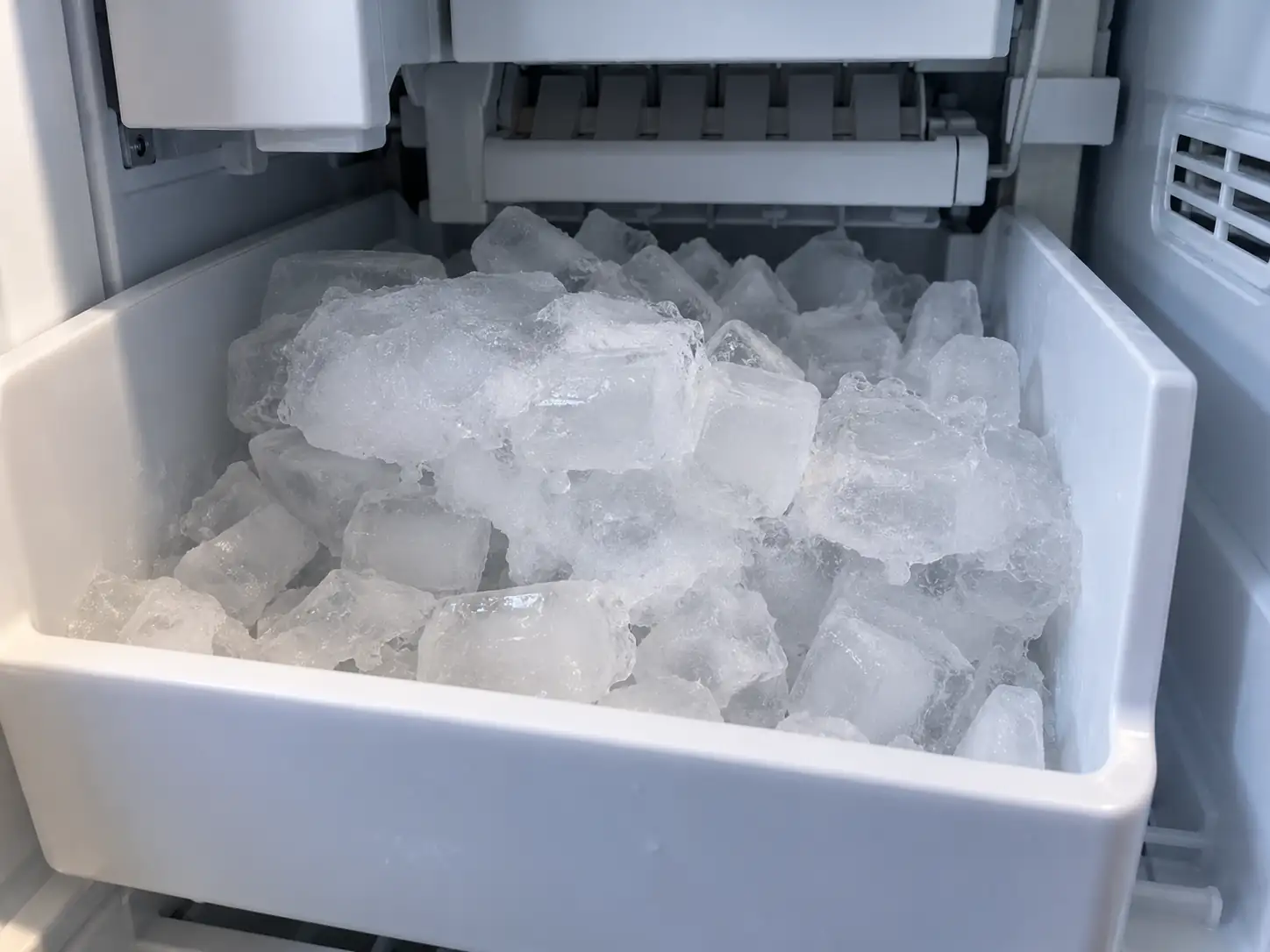
If your ice maker keeps freezing up, the problem may not be the ice maker by itself. Ice clumps, frozen chutes, jammed dispensers, and repeat freeze-ups can happen when the freezer temperature is swinging, warm air is getting inside, the ice bin is not seated correctly, or the dispenser path is freezing over.
A one-time clump of ice is not always a major repair issue. But if you clear the ice bin and the same problem comes back, the refrigerator needs more than guesswork. The goal is to figure out whether this is a simple ice-bin issue, a dispenser jam, or a freezer performance problem before replacing parts that may not be the real cause.
Why Ice Makers Freeze Up
An ice maker can freeze up when loose cubes melt slightly and refreeze together. That can happen if the freezer door is opened often, the door seal is leaking warm air, the freezer temperature is inconsistent, or ice sits in the bin long enough to soften and harden again.
The same issue can also show up as a dispenser problem. You may still have ice in the bin, but the ice will not move because the cubes have frozen into a block, the chute has iced over, or the auger cannot push the ice forward. If you are also dealing with slow dispensing or no ice coming through the door, iFiX has a related guide on what to check when the ice maker makes ice but will not dispense it.
Common Causes of Ice Clumps and Jams
Ice Sitting Too Long in the Bin
If the ice maker is working but your household does not use much ice, cubes can sit in the bin for a long time. Over time, small amounts of surface melting and refreezing can make the cubes stick together.
This is more likely if the freezer temperature changes during normal use. A few stuck cubes may only need to be dumped and replaced, but a solid block of ice that keeps coming back points to a repeat condition inside the freezer or dispenser path.
Warm Air Getting Into the Freezer

Warm air is one of the biggest reasons ice keeps clumping. It can enter through a door that is not closing all the way, a weak gasket, food blocking the door, or frequent freezer openings.
When warm, moist air gets inside, it can create frost and soften the outer edges of the ice cubes. Those cubes can then refreeze together into a lump that jams the bin, chute, or dispenser.
Freezer Temperature Swings
Your freezer should stay consistently cold, not just “feel cold” when you open the door. If the temperature rises and falls, ice can partially melt and refreeze even if the freezer still seems cold enough at first glance.
Use an appliance thermometer if you have one. The FDA recommends keeping the freezer at 0°F, and frozen food that still has ice crystals or is at 40°F or below may be safe to refreeze or cook, depending on the situation. If you are worried about food safety, compare what you are seeing with the FDA’s refrigerator and freezer thermometer guidance.
Ice Bin Not Seated Correctly
The ice bin has to sit in the right position for the auger and dispenser system to work correctly. If the bin is slightly out of place, ice may not feed smoothly, and cubes can jam near the front of the bin or chute.
This can happen after the bin is removed for cleaning or after someone pulls it out to break apart clumps. If the bin does not slide back in cleanly, do not force it. Remove loose ice, check for obvious obstructions, and reseat it carefully.
Frozen Dispenser Chute
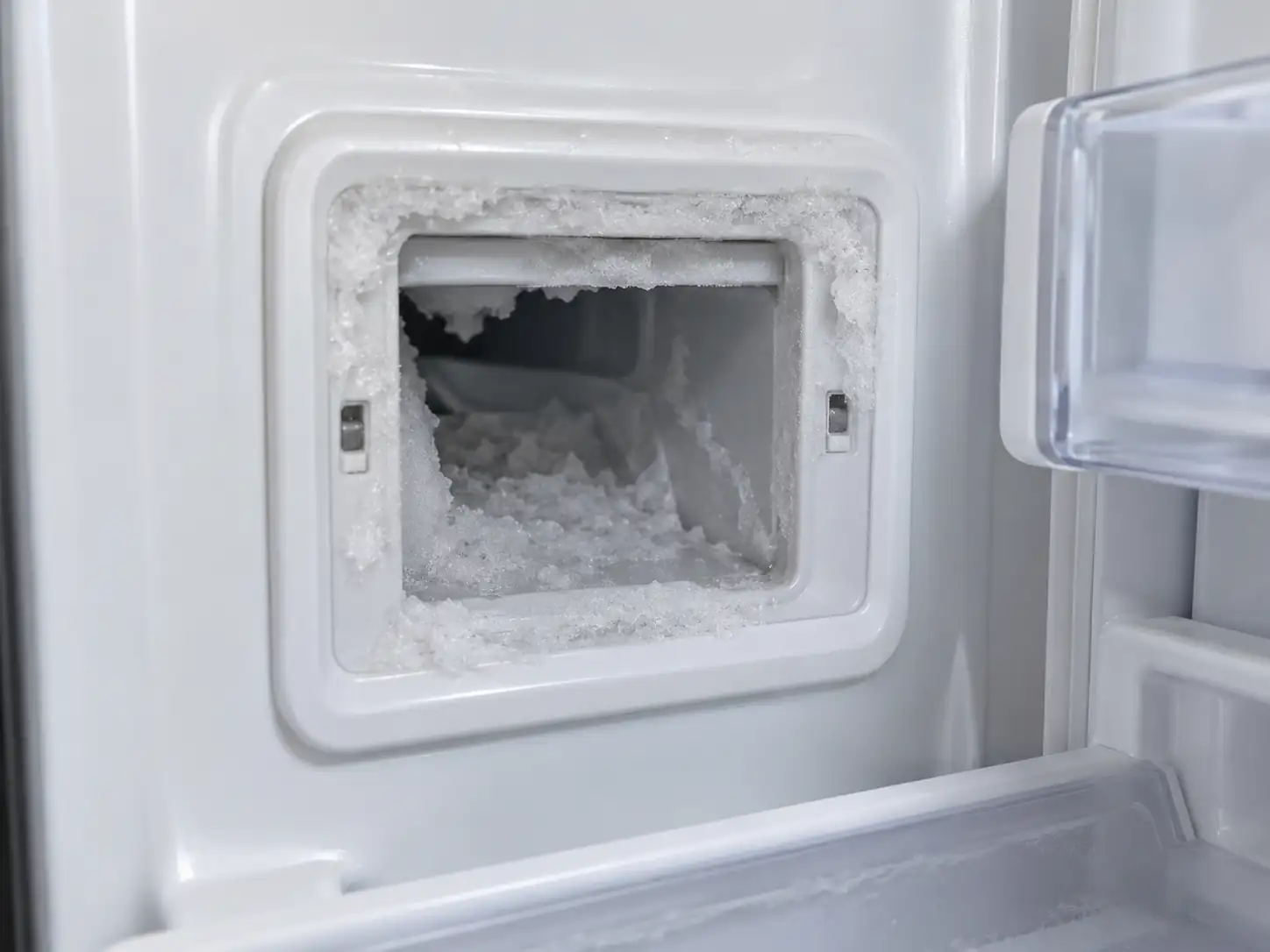
If your refrigerator dispenses ice through the door, the chute can frost over or freeze shut. This can make it seem like the ice maker has failed, even when the bin is full.
A frozen chute is especially common when crushed ice, small ice fragments, or moisture collect near the opening. If the chute keeps freezing after you clear it, the issue may be related to air leaks, door sealing, dispenser flap problems, or inconsistent freezer temperature.
A Weak or Jammed Auger
The auger is the part that moves ice forward from the bin toward the dispenser. If ice freezes around it, the motor may hum or grind while little or no ice comes out.
Do not keep pressing the dispenser paddle if you hear the motor struggling. Forcing the system can make the jam worse or stress plastic parts that were not meant to push through a frozen block of ice.
Water or Fill Problems
Sometimes the ice itself gives clues. Oversized cubes, hollow cubes, small cubes, or sheets of ice in the bin can point to a water fill issue, a valve issue, or ice that is not forming and releasing correctly.
This does not always mean the ice maker needs to be replaced. A proper diagnosis should look at the water supply, fill behavior, freezer temperature, and ice maker operation together instead of assuming one part is bad.
What You Can Safely Check First
Start by removing the ice bin and looking for obvious clumps. If the ice is stuck together but the freezer otherwise seems normal, dump the clumped ice, rinse and dry the bin, then reinstall it once it is completely dry.
Next, check whether the freezer door closes all the way. Look for food packages blocking the door, frost around the gasket, or a seal that looks loose, torn, or dirty. You can also check whether food is packed tightly against the vents because blocked airflow can create uneven temperatures inside the freezer.
If you have an appliance thermometer, place it in the freezer and give it time to stabilize. This is more reliable than guessing by feel. A freezer can feel cold to your hand while still running warm enough to cause clumping, soft food, frost, or repeat ice problems.
Also test the dispenser gently. Listen for the auger motor, try cubed and crushed ice if your refrigerator has both, and check whether water still dispenses. These details help narrow down whether the issue is more likely in the bin, dispenser path, ice maker, water supply, or freezer system.
What Not to Do
Do not chip at frozen plastic parts with a knife or screwdriver. The ice bin, chute, and dispenser area can crack, and a small jam can turn into a more expensive repair.
Do not use a hair dryer inside the freezer or dispenser area. Heat can warp plastic, damage seals, or create water near electrical components. It is safer to remove the bin, let it thaw outside the appliance, dry it fully, and reinstall it carefully.
Do not keep opening the freezer every few minutes to see if it feels colder. Every door opening brings in warm air, which can make frost and ice clumping worse. If food safety is a concern, use a thermometer and protect the food first.
When Ice Maker Freezing Is a Sign of a Bigger Refrigerator Problem
A repeat ice maker freeze-up can be the first visible sign that the freezer is not staying consistent. Watch for other symptoms, especially soft ice cream, frost buildup, water in or under the refrigerator, food that feels softer than normal, or a freezer fan that sounds different.
You should also pay attention if the water dispenser is acting strange at the same time. Slow water, no water, hollow cubes, or odd ice shape can point to a water supply or valve issue instead of a simple ice clump.
If the dispenser jams again after you clear it, the chute keeps icing over, or the ice keeps freezing into one block, it is time to stop guessing. A refrigerator diagnosis can check the full system instead of replacing the ice maker first and hoping that solves it.
What iFiX Checks During Diagnosis
When iFiX looks at an ice maker freezing up, the technician is not only checking whether the ice maker can produce ice. An iFiX technician may need to inspect the ice bin, dispenser chute, auger, freezer temperature, airflow, door seal, water supply, fill behavior, and related refrigerator components.
That matters because the visible symptom is not always the failed part. A jammed dispenser may start with clumped ice. Clumped ice may start with warm air. Warm air may come from a seal, airflow issue, or door problem.
iFiX can also help you talk through what you are seeing over the phone before anyone comes out. If a service visit is needed, the technician can diagnose the problem, explain what is happening, and review the repair options before work begins.
What to Do Next If the Ice Keeps Freezing Up
If the ice only clumped once after sitting unused, dump the bin, dry it, reseat it, and monitor what happens. Make sure the freezer door closes fully, keep food away from vents, and check the temperature with an appliance thermometer if you have one.
If the ice keeps freezing into a block, the chute keeps icing over, the dispenser keeps jamming, or the freezer temperature seems inconsistent, call iFiX Appliance Repair. Describe whether the ice maker is still making ice, whether the dispenser motor makes noise, whether water still dispenses, and whether you see frost, soft food, or water around the refrigerator.
For related refrigerator warning signs, you can also read iFiX’s guide on signs your refrigerator needs immediate repair or learn more about ice maker repair. If you are ready to talk through the issue, contact iFiX Appliance Repair for refrigerator and ice maker diagnosis in Northern Utah.
FAQs About an Ice Maker Freezing Up
Why does my ice maker keep freezing into a block?
Your ice maker may keep freezing into a block because the ice is partially melting and refreezing. Common causes include freezer temperature swings, warm air entering through the door seal, frequent door openings, ice sitting too long, or a dispenser chute that is not sealing correctly.
If it happens once, you may be able to clear the bin and monitor it. If the ice freezes into a block again, the freezer or dispenser system should be checked.
Is an ice maker freezing up the same as an ice maker not working?
No. An ice maker can still make ice but have a freezing, clumping, or dispensing problem. In that case, the problem may be in the ice bin, chute, auger, dispenser flap, freezer temperature, or airflow rather than the ice maker itself.
That is why diagnosis matters. Replacing the ice maker may not fix the problem if the real issue is warm air, frost buildup, or a jammed dispenser path.
Can I keep using the ice dispenser if it is jammed?
You should not keep pressing the dispenser if it hums, grinds, or struggles without moving ice. The ice may be frozen into a clump, the auger may be stuck, or the chute may be blocked.
Clear what you can safely clear without forcing parts. If the dispenser still jams after the bin is reseated and loose clumps are removed, call for diagnosis.
Why is there frost around my ice maker?
Frost around the ice maker can happen when warm, moist air gets into the freezer. It may come from a door that is not sealing, a dispenser flap issue, frequent openings, blocked airflow, or temperature inconsistency.
Light frost after normal use is not always a major problem. Heavy frost, repeat frost, or frost with clumped ice is more concerning.
Should I turn off the ice maker if it keeps freezing up?
You can turn off the ice maker temporarily if it keeps producing ice into a jammed or frozen bin. This can prevent more ice from piling into an area that is already blocked.
Turning it off does not fix the underlying cause. It is a temporary step while you clear the bin, check the freezer, or schedule diagnosis.
Can a dirty water filter make the ice maker freeze up?
A dirty or clogged water filter can affect water flow and ice production, but it is not the only possible cause of freeze-ups. Ice clumps and jams are often related to temperature swings, warm air leaks, bin alignment, chute frost, or dispenser issues.
If the cubes are small, hollow, irregular, or slow to produce, the filter and water supply are worth checking. If the ice freezes into a block, the freezer temperature and dispenser path should also be checked.
When should I call iFiX for an ice maker freezing up?
Call iFiX if the ice keeps clumping after you clear it, the dispenser jams again, the chute keeps freezing, the freezer has frost buildup, food is softening, or the water dispenser is acting strange. Those symptoms can point to a larger refrigerator issue rather than a simple ice-bin problem.
Call (801) 731-4349 or book online. Same-day appointments available.