
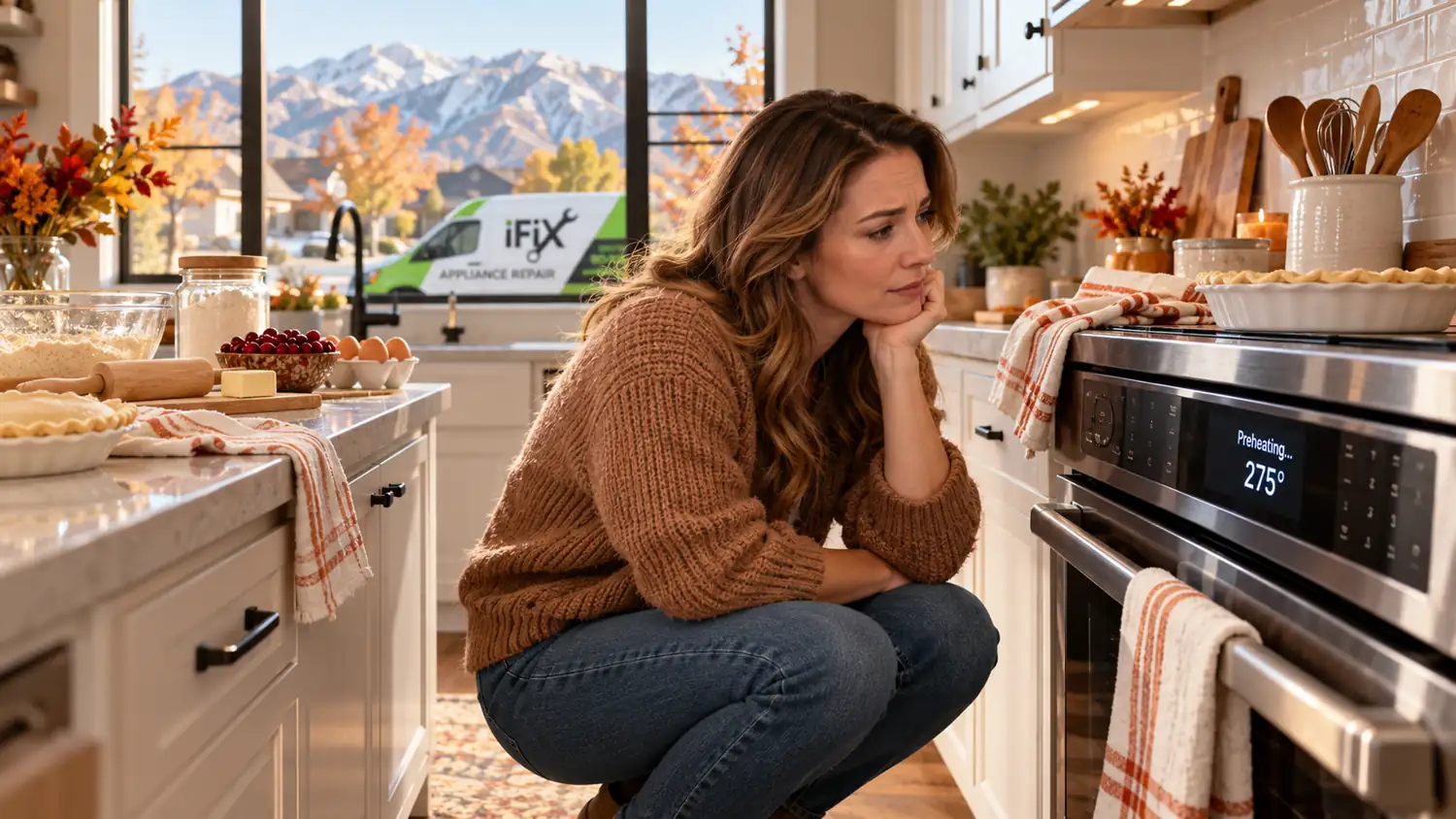
If your oven takes long to preheat, Thanksgiving week is not the time to “wait and see.” A slow oven might still get hot eventually, which makes the problem easy to ignore, but holiday cooking puts more pressure on the oven than a normal weeknight dinner.
The real question is not whether the oven turns on. The better question is whether it can heat consistently, recover after the door opens, and stay reliable when you are trying to cook food on a schedule. If the oven has been slower than usual, testing it before Thanksgiving week gives you time to decide whether it is a minor annoyance, a pattern worth watching, or a problem that needs professional diagnosis.
iFiX Appliance Repair helps homeowners across Northern Utah with oven, stovetop, and range repair. If your oven is taking longer than normal to preheat, do a simple test now instead of finding out during holiday cooking.
Quick Answer: What Should You Do If Your Oven Takes Too Long to Preheat?
If your oven is taking longer than normal to preheat, test it before Thanksgiving week by setting it to a common baking temperature, timing how long it takes to say it is ready, and noticing whether the heat feels weak, uneven, or inconsistent. If the slow preheat happens more than once, gets worse, or affects how food cooks, it is worth getting the oven diagnosed before the holiday rush.
Do not take apart gas, electrical, or internal oven components unless you know exactly what you are doing. For safety, stick to surface-level checks like timing the preheat, checking that the door closes fully, looking for obvious damage to the door gasket, and noticing unusual smells, clicking, breaker trips, or temperature swings.
Why Slow Preheating Matters More Before Thanksgiving
A slow-preheating oven is frustrating because it does not always feel like a true breakdown. The oven may still beep eventually, the display may look normal, and dinner may still get cooked if you give it enough extra time.
That changes during Thanksgiving week. The oven may need to handle turkey, casseroles, rolls, pies, reheating, and back-to-back cooking. If it already struggles to preheat on a normal day, the problem can become much harder to work around when every dish has a place in the schedule.
Slow preheating can also create a false sense of security. The oven might say it is ready, but food may still cook unevenly or take longer than the recipe expects. For Thanksgiving food safety, follow official guidance from the USDA on using a food thermometer and making sure turkey reaches a safe internal temperature.
The Simple Oven Preheat Test to Do Before the Holiday Rush
Pick a day before Thanksgiving week when you are not in the middle of cooking a meal. Set the oven to a normal baking temperature you actually use, such as 350°F, and start a timer as soon as you turn it on.
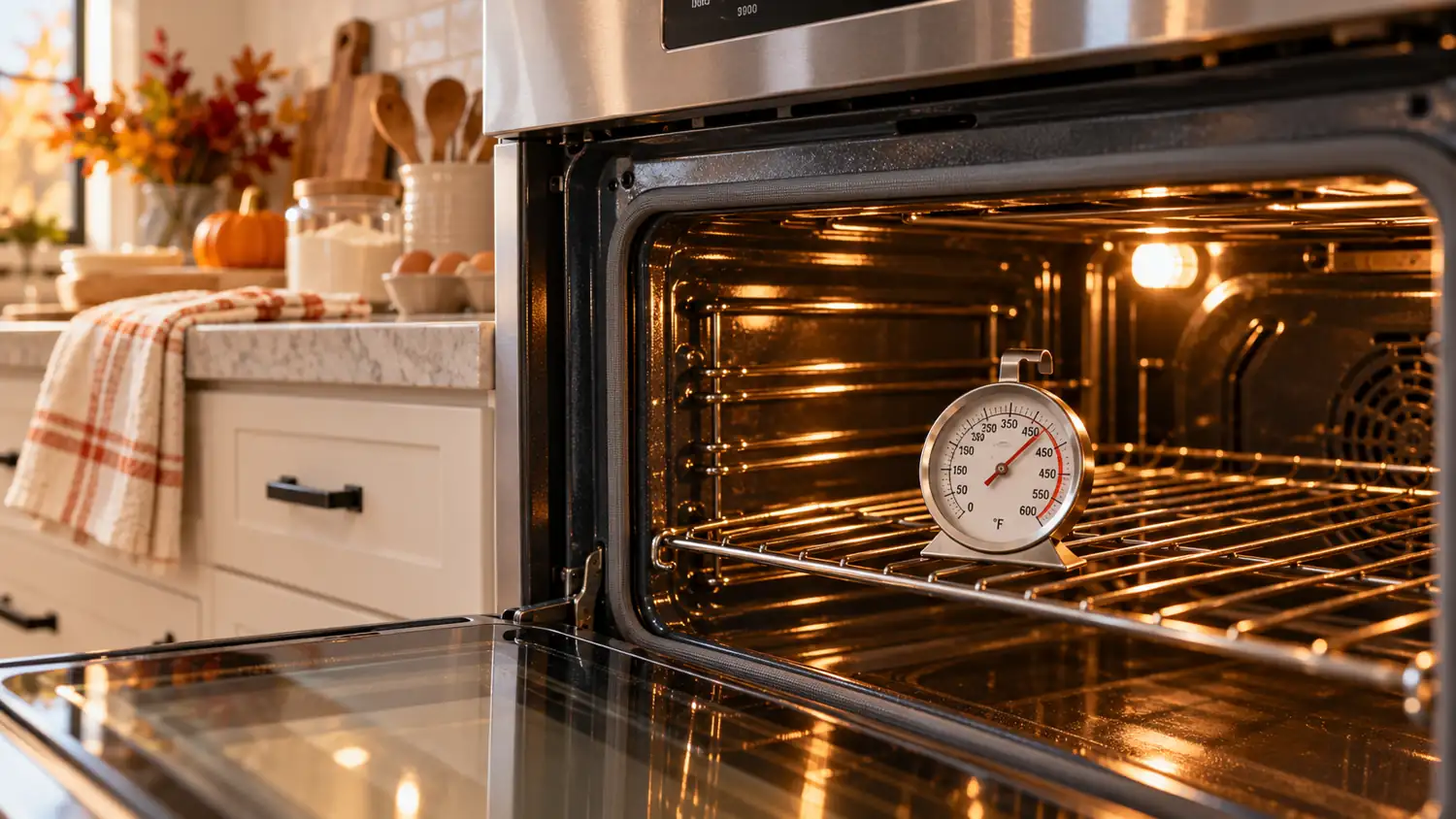
When the oven says it is preheated, write down how long it took. If you have an oven-safe thermometer, you can place it inside the oven and compare the thermometer reading after the oven says it is ready. Do not open the door repeatedly during the test because that can release heat and make the timing less useful.
Run the test again another day if the result seems questionable. One unusual preheat cycle is not always a major repair issue, but a repeated pattern matters. If the oven keeps taking much longer than it used to, or if it says it is ready but food still cooks too slowly, the oven may need a closer look.
What to Watch During the Test
The timing is helpful, but it is not the only clue. Pay attention to how the oven behaves while it is heating because those details can help a technician understand what may be happening.
Watch for these signs:
- The oven takes much longer than it used to.
- The oven says it is preheated, but food still cooks slowly.
- The oven temperature seems to swing up and down.
- Food browns unevenly or stays pale in certain areas.
- A gas oven clicks repeatedly or seems slow to ignite.
- An electric oven has an element that does not glow normally.
- The oven gives off a gas smell, burning electrical smell, or unusual odor.
- The oven trips the breaker or shuts off during preheat.
If you notice a gas smell, burning electrical smell, or repeated breaker trips, stop using the oven and call for help. Those are not Thanksgiving-week guessing problems, and they are not worth trying to force through one more meal.
Common Reasons an Oven May Take Longer to Preheat
An oven can take longer to preheat for several reasons, and the cause depends on whether the unit is gas or electric. This is why guessing from a symptom alone can be frustrating.
On an electric oven, slow preheating may be related to a bake element, broil element, sensor, control issue, door seal problem, or power issue. On a gas oven, slow preheating may involve the igniter, burner, sensor, gas flow, or control system.
Sometimes the oven is not actually broken. A packed oven, repeated door opening, cold cookware, or an inaccurate expectation of how fast that specific model should heat can make preheating feel slower. The important clue is whether this is a change from how the oven normally behaves.
If you want more background, iFiX has a complete guide to oven repairs that explains common oven problems in more detail. For this Thanksgiving test, though, the goal is simpler: find out whether your oven is acting normally before you depend on it for the holiday meal.
When “It Still Works” Is Not a Good Reason to Wait
The hardest oven problems are the ones that are not completely broken yet. If the oven still turns on, it is easy to convince yourself that it can wait until after the holiday.
That might be fine if the slow preheat happened once and never came back. But if the oven has been getting slower, cooking unevenly, or making you adjust recipes to compensate, waiting can turn a manageable diagnosis into a last-minute hosting problem.
A good rule of thumb is this: if you have already changed your cooking habits because of the oven, the problem is worth checking. Turning the temperature higher, adding extra time to every recipe, rotating pans constantly, or avoiding certain dishes are all signs that the oven may not be performing the way it should.
What Not to Do Right Before Thanksgiving
Do not run the self-clean cycle right before Thanksgiving week if the oven has already been acting strange. Self-clean cycles use very high heat, and if an older oven already has a weak component, the timing can make a small issue show up at the worst possible moment.
Do not remove panels, touch wiring, adjust gas components, or keep using the oven if you smell gas or electrical burning. iFiX has a separate guide on what is and is not safe for DIY oven repair if you want a clearer line between simple homeowner checks and repairs that should be handled by a technician.
For holiday cooking safety, review the NFPA’s Thanksgiving cooking safety guidance and avoid leaving active cooking unattended. A slow oven is stressful, but rushing, multitasking, or trying unsafe workarounds can create bigger problems than a delayed meal.
When to Call iFiX Before Thanksgiving Week
Call iFiX if the oven takes longer than normal to preheat more than once, does not seem to hold temperature, cooks unevenly, or gives you warning signs like strange smells, weak heat, repeated clicking, or breaker trips. You should also call if the oven has been unreliable and you are planning to host Thanksgiving.
The point of calling is not to automatically commit to a repair. The point is to get a clear diagnosis before the holiday schedule makes everything feel urgent.
iFiX can diagnose the issue, explain what is happening, and review the repair options with you before work begins.
Clear Next Steps Before Thanksgiving Week
Start by testing the oven on a normal day when you are not trying to cook a meal. Time the preheat, note whether the oven seems to heat evenly, and write down anything unusual you notice.
If the oven behaves normally, keep an eye on it and avoid saving major testing for Thanksgiving morning. If the slow preheat repeats, gets worse, or comes with warning signs, call iFiX Appliance Repair before Thanksgiving week so there is still time to understand the problem.
For broader holiday prep, you can also review iFiX’s guide on fixing appliance problems before the holidays. It covers the other appliances that tend to get stressed during hosting season, including refrigerators, dishwashers, washers, and dryers.
FAQs About an Oven That Takes Long to Preheat
Why does my oven take so long to preheat?
An oven may take longer to preheat because of a weak heating component, gas ignition issue, temperature sensor problem, door seal issue, control problem, or normal model differences. The most important clue is whether the oven is suddenly taking longer than it used to.
Is a slow-preheating oven dangerous?
A slow-preheating oven is not automatically dangerous, but certain symptoms should be taken seriously. Stop using the oven and call for help if you smell gas, notice a burning electrical smell, see repeated ignition problems, or the oven trips the breaker.
Should I test my oven with an oven thermometer?
Yes, an oven-safe thermometer can help you see whether the oven is close to the temperature it claims after preheating. It is not a full diagnosis, but it can give you useful information before you call for service.
Can I still cook Thanksgiving dinner if my oven preheats slowly?
Maybe, but it depends on how the oven behaves after it preheats. If it only takes a little longer but holds heat well, you may be able to plan around it. If it heats inconsistently, cooks unevenly, or keeps getting worse, it is better to diagnose the problem before relying on it for Thanksgiving dinner.
Should I run self-clean before Thanksgiving?
Avoid running self-clean right before Thanksgiving if your oven has already been acting up. The high heat from a self-clean cycle can be hard on older or weakened components, and you do not want a hidden issue to show up right before a holiday meal.
When should I call an appliance repair technician?
Call a technician if the oven repeatedly takes longer than normal to preheat, does not hold temperature, cooks unevenly, smells unusual, clicks without lighting properly, or trips the breaker. If Thanksgiving week is coming and the oven has already been unreliable, it is better to get an answer early.
Does iFiX repair ovens in Northern Utah?
Yes. iFiX Appliance Repair services ovens, stovetops, and ranges for homeowners across Northern Utah. If your oven is taking too long to preheat, call iFiX at (801) 731-4349 before Thanksgiving week so you have time to understand the issue and decide what makes sense.
Call (801) 731-4349 or book online. Same-day appointments available.