
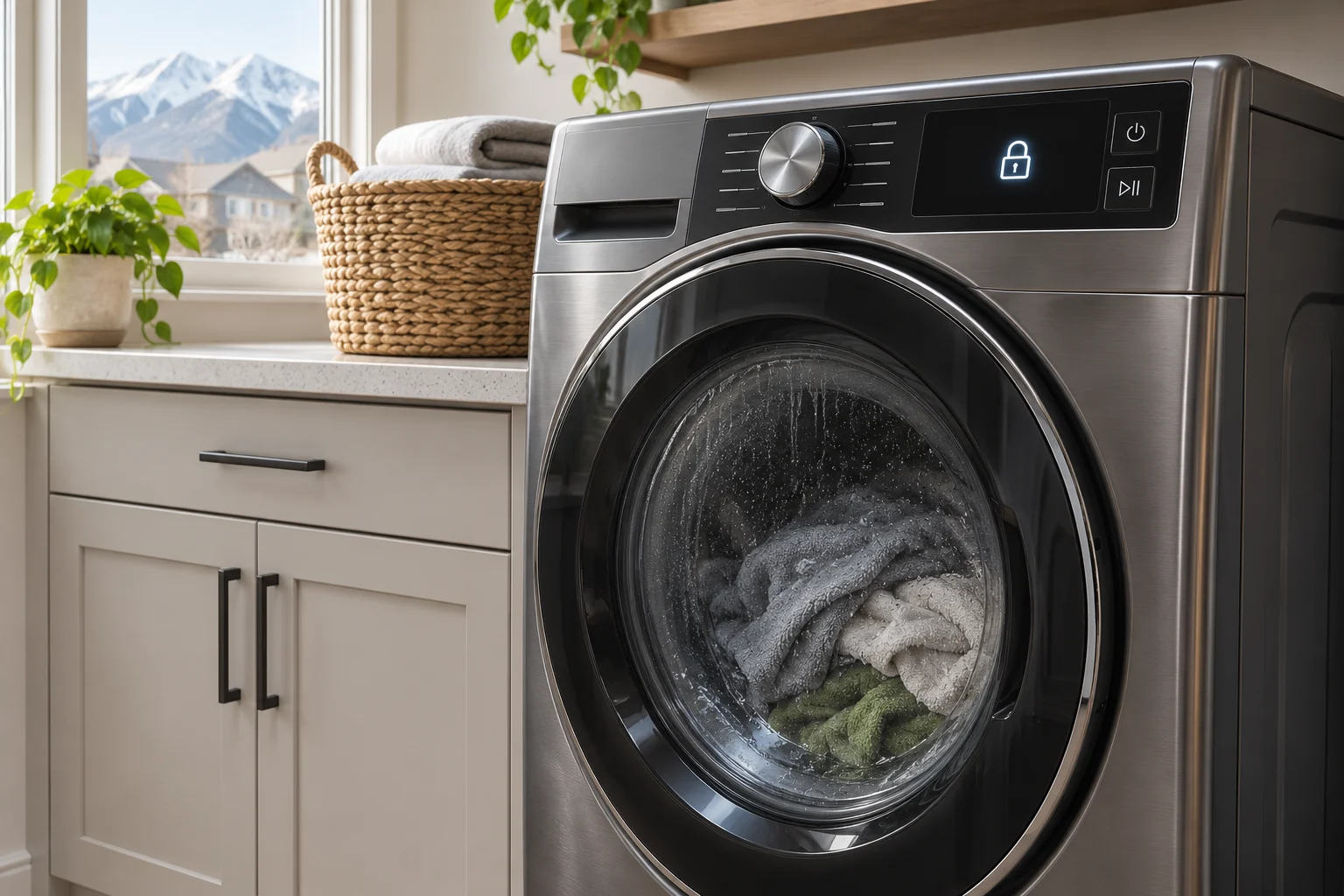
The washing machine says the cycle is finished, but the door won’t open. Your clothes are still inside, the handle won’t budge, and you’ve probably tried pressing a few buttons without getting anywhere.
It’s especially frustrating when you need those clothes for work, school, or another load of laundry. Now you’re wondering whether the washer just needs more time or whether something has gone wrong.
When a washing machine door won’t unlock after a cycle, possible causes include a normal safety delay, water remaining in the drum, an unfinished cycle, a control setting, or a problem with the door-lock mechanism. Some of these issues are straightforward, but others need a closer look.
Before pulling harder on the handle or attempting to release the lock manually, here’s what you can safely check and how to know when it’s time for help.
Why Is My Washing Machine Door Still Locked After the Cycle?
Most modern washing machines have a locking system that prevents the door or lid from opening while the appliance is operating. This helps protect you from moving parts and, especially with front-load washers, from water spilling onto the floor.
However, the lock doesn’t always release the moment the display reaches zero. The washer may still be checking whether the drum has stopped, the water has drained, or the temperature is safe.
Here are some common reasons a washer door stays locked.
1. The Washer Hasn’t Released Its Safety Lock Yet
Sometimes the washing machine has finished washing, but the locking mechanism needs a little more time to disengage.
You might notice the cycle timer has reached zero, yet the lock symbol remains illuminated. Depending on the model, you may also hear a click when the lock finally releases.
If the washer has just finished, give it a few minutes before trying again. A short delay is normal on some models and doesn’t necessarily mean anything is broken.
2. There’s Still Water Inside the Washer
If the washer hasn’t drained completely, it may keep the door locked to prevent water from spilling out.
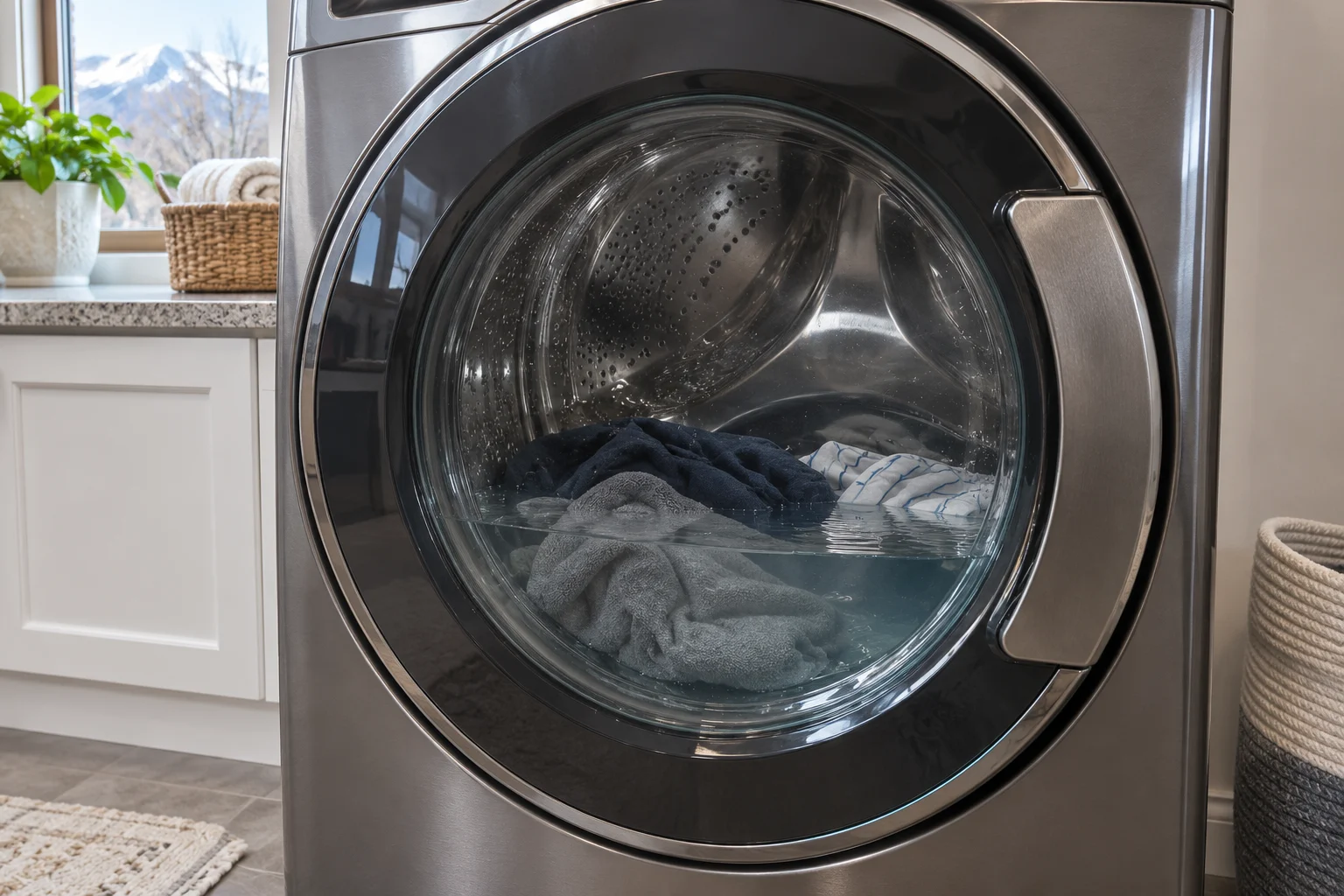
This is particularly important with front-load machines because the door sits below the upper water level. Even if the washer appears to have finished, a drainage problem may prevent the lock from releasing.
Look through the door, if possible, to see whether water remains in the drum. You might also notice clothes sitting in water or hear the drain pump running without the machine completing its final steps.
If the washer didn’t drain, the locked door may be a symptom of a drainage problem rather than a problem with the lock itself.
For a closer look at that issue, see our guide on how to drain a washing machine that won’t drain.
3. The Wash Cycle Didn’t Actually Finish
A washer can stop making noise without completing its programmed cycle. It might have paused because of an unbalanced load, a drainage issue, or an error that interrupted the final spin.
Check the display for a pause indicator, flashing light, or error code. A machine that looks finished may still be waiting for a condition to clear before it can complete the cycle.
If the washer stopped unexpectedly, don’t assume the lock is the part that failed. The machine may be keeping the door closed because another problem prevented it from finishing.
4. A Control Setting Is Keeping the Door Locked
Some washers have features that continue operating after the main wash cycle ends. Depending on the model, these may periodically tumble the clothes to reduce wrinkles or keep remote-control functions active.
Certain settings can leave the door locked until the feature is canceled. For example, Whirlpool explains that its Fresh Hold and TumbleFresh features can affect when the door releases.
Check the control panel and your owner’s manual before assuming something has failed. Also look for an active Child Lock or Control Lock indicator, although these settings don’t affect the physical door lock the same way on every model.
5. The Door-Lock Mechanism Isn’t Releasing
If the washer has finished, the water has drained, and the appropriate waiting period has passed, the locking mechanism itself may be malfunctioning.
A washer door lock contains components that communicate with the machine’s controls. If something isn’t working properly, the washer may continue showing the door as locked even when the cycle is over.
This can happen with a faulty lock assembly, damaged latch, wiring problem, or control issue. However, the symptom alone doesn’t tell you which component has failed.
That’s why replacing a door lock without checking the rest of the washer can lead to unnecessary repairs.
What to Do When Your Washing Machine Door Won’t Unlock
If your clothes are trapped inside, start with the simplest checks. You don’t need to take the machine apart or try to defeat the locking mechanism to determine whether the problem is something straightforward.
Step 1: Give the Washer Time to Unlock
If the cycle just ended, wait a few minutes and watch the door-lock indicator.
Some models need additional time for the drum to stop completely or for the lock to disengage. If you recently used a hot-water or sanitizing cycle, the machine may also need time to cool before it allows the door to open.
Avoid repeatedly pulling on the handle while waiting. If the lock releases normally, the door should open without extra force.
Step 2: Check the Display and Cycle Status
Look at the control panel to confirm that the washer has actually completed its cycle.
If the machine is paused or a special setting is active, follow the manufacturer’s instructions for canceling that function. On some washers, pressing Start/Pause or Cancel allows the appliance to finish its shutdown process and release the lock.
Pay attention to any error codes or flashing indicators. Write down what appears on the display rather than repeatedly pressing buttons, since that information may help identify what’s preventing the washer from unlocking.
Step 3: Check for Water Before Trying Another Cycle
Look through the front-load washer door to see whether water is still inside. If you have a top-load washer, don’t force the lid open just to inspect the drum.
If your washer has a Drain & Spin or drain-only setting, and there are no signs of leaking, overheating, or unusual mechanical noises, you may be able to run that function according to the owner’s manual.
The goal is to let the washer remove any remaining water through its normal drainage system. If the machine drains successfully, it may release the lock after completing the process.
If it won’t drain, stops again, or continues displaying an error, don’t keep restarting it.
Step 4: Try a Power Reset if the Manual Recommends It
Some manufacturers recommend disconnecting the washer from power briefly when the door remains locked after an otherwise completed cycle.
Before attempting this, confirm that the drum has stopped and there is no sign of overheating, leaking, or another electrical problem. If the washer is hot or full of water, address that condition first.
Follow the reset procedure for your particular model. If the outlet is safely accessible, this may involve unplugging the washer for the manufacturer’s recommended interval and reconnecting it.
Be aware that unplugging a washer does not guarantee the door will unlock. Some machines retain their locked state until power is restored and the controls confirm that opening is safe.
If the door stays locked after the recommended reset, there’s little benefit in repeatedly disconnecting and reconnecting the machine.
What If Your Washer Door Is Locked and There’s Water Inside?
A washing machine that hasn’t drained creates a different situation from one that’s empty but still locked.
The most important concern is preventing water from spilling onto the floor. If a front-load washer has water above the bottom of the door opening, forcing that door open could release a significant amount of water.
Some front-load washers have an accessible emergency drain hose or pump filter behind a lower service panel. However, the location and proper procedure vary by manufacturer and model.
LG’s front-load washer door troubleshooting instructions explain how retained water can keep the door locked and provide model-dependent drainage guidance.
Do not remove a drain filter or pull an emergency-release mechanism unless your washer’s instructions specifically explain how to do so safely. Water may still be hot, and opening a filter without draining the machine correctly can cause flooding.
If the machine refuses to drain through its normal controls and you aren’t sure how to proceed, it’s better to have the problem diagnosed than risk water damage or an additional appliance problem.
What Not to Do When Your Washer Door Is Stuck
When laundry is trapped inside, it’s tempting to try whatever might get the door open. Unfortunately, forcing the mechanism can turn one repair problem into two.
Avoid these common mistakes:
-
Don’t yank or pry the handle. A handle that feels stuck may still be held by the locking mechanism. Applying extra force can damage the handle, latch, or door assembly.
-
Don’t try to bypass the safety lock. The lock may be protecting you from moving parts, hot water, or water that hasn’t drained.
-
Don’t assume every emergency-release method works on every washer. Online instructions often show a particular brand or model, and the same procedure may not apply to your machine.
-
Don’t keep restarting a washer that’s leaking, making grinding noises, or smelling hot. Stop using it and seek professional guidance rather than attempting more cycles.
If the washer is showing signs of an electrical problem, such as smoke, sparking, or a burning smell, stop operating it. Disconnect power only if it is safe to do so, and don’t touch electrical equipment while standing in water.
Getting the clothes out matters, but avoiding damage and injury matters more.
Does a Locked Washer Door Mean Something Needs Repair?
Not necessarily. A washer door that unlocks normally after a short delay, a canceled setting, or a manufacturer-approved reset may not have a mechanical problem.
The bigger question is whether the machine is behaving normally afterward. Opening the door once doesn’t always mean the underlying issue has been resolved.
Signs the Problem May Have Been Temporary
A one-time issue is less concerning when the washer completes its cycle, drains completely, and unlocks normally afterward.
For example, if a temporary control interruption caused the delay and the appliance returns to normal operation, there may be nothing else to repair.
Still, pay attention during the next use. If the same problem returns, it’s worth investigating instead of repeatedly relying on resets.
Signs the Washer Needs Professional Attention
A locked door is more likely to require repair when the washer continues refusing to unlock after the appropriate checks.
Other warning signs include:
-
The door remains locked even though the drum is empty and the cycle is finished.
-
The washer repeatedly displays a door-lock or latch-related error.
-
The machine won’t drain or complete its final spin.
-
The door unlocks after a reset but gets stuck again during later cycles.
-
The washer makes unusual clicking, grinding, or buzzing sounds near the lock.
These symptoms don’t automatically mean you need a new lock assembly. The drain system, locking mechanism, sensors, and electronic controls can all affect what happens at the end of a cycle.
A technician can examine those systems to determine what’s actually preventing the door from opening.
If the washer has also been shaking, stopping, or struggling after bulky laundry loads, our article about washer problems after washing blankets, coats, and heavy winter loads explains how load-related issues can interrupt normal operation.
What Happens When a Technician Checks a Washer That Won’t Unlock?
When a washing machine stays locked, the first step is understanding what the appliance was doing when the problem happened.
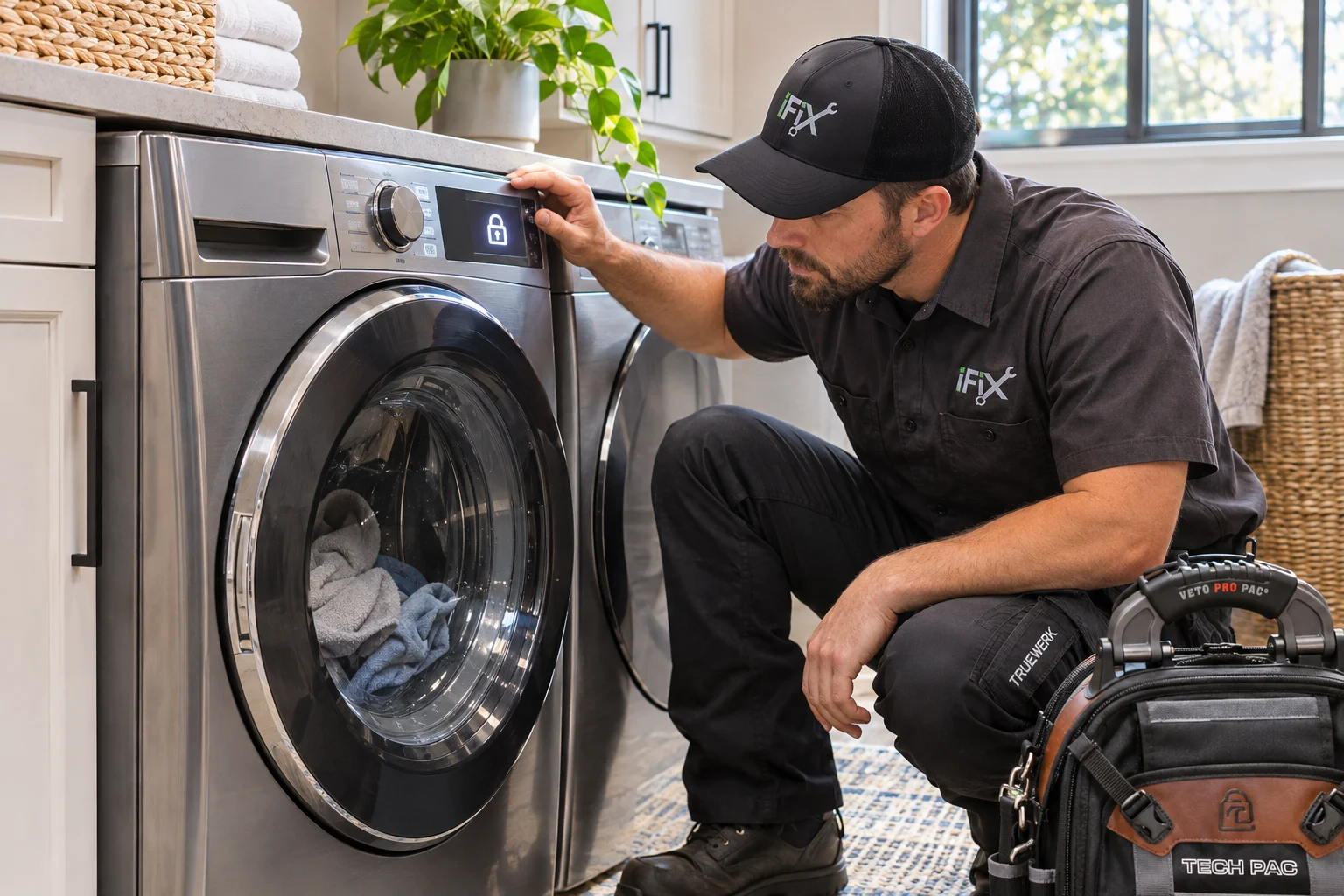
A technician may check whether the washer completed its cycle, whether water remains inside, and whether the controls are reporting a fault. They may also inspect the locking mechanism and related components, depending on the washer’s design and symptoms.
The goal is to identify the cause before recommending a repair.
For example, replacing a door lock won’t necessarily solve the problem if the washer is keeping the door locked because it can’t drain. Similarly, a washer that drains normally but never receives the correct unlock signal may need a different type of repair.
If your machine is still stuck after the basic checks, iFiX Appliance Repair offers washing machine repair in Northern Utah. Our technician can help identify the problem and explain the repair options before work begins.
FAQs About Washing Machine Doors That Won’t Unlock
Can a power outage cause a washing machine door to stay locked?
Yes. If the power goes out during a wash cycle, the washing machine may remain locked because it hasn’t completed the steps required to safely release the door. Some models also keep their doors locked when power is disconnected.
Once power returns, the washer may resume its cycle or require a reset according to the manufacturer’s instructions. If the door remains locked after the machine has finished and drained, there could be an issue with the locking mechanism or controls.
Why does my washer door handle move, but the door still won’t open?
If the handle moves but the washing machine door stays closed, the handle or latch mechanism may be damaged or disconnected. It’s also possible that the washer’s locking system hasn’t released, even though the handle feels loose.
Avoid pulling harder or using tools to pry the door open. Doing so could damage the handle, latch, or surrounding door components. If the washer has finished its cycle and the lock still won’t release, a technician can determine whether the problem is mechanical or electrical.
How long can wet clothes stay inside a locked washing machine?
Wet clothes can begin developing a musty smell after several hours, especially in a warm, closed washing machine. There’s no exact time limit because temperature, moisture, and how clean the laundry is all affect how quickly odors develop.
If your clothes have been trapped overnight or smell sour when you finally retrieve them, it’s best to wash them again before drying. If the washer still isn’t working properly, use another machine rather than risking another load getting stuck.
When to Call iFiX Appliance Repair
If your washing machine door won’t unlock after the cycle, start by giving the lock time to release, checking the control panel, and confirming whether the washer has drained.
If those steps don’t resolve the problem, you don’t need to keep pulling on the handle or trying random fixes. A washer that stays locked may have a drainage, latch, sensor, or control issue that needs proper diagnosis.
At iFiX Appliance Repair, we help homeowners in Ogden, Riverdale, Roy, Layton, and surrounding Northern Utah communities with washing machine problems that interrupt everyday routines.
Still have clothes trapped inside your washer?
Call iFiX Appliance Repair at (801) 731-4349 and describe what’s happening. Let us know whether the washer has finished its cycle, whether there’s water inside, and whether any error codes appear.
We’ll help you determine the next step and whether a service appointment makes sense.
Business hours: Monday–Friday, 8 AM–5 PM.
You can also visit our contact page for more information.
Call (801) 731-4349 or book online. Same-day appointments available.